


Something I’ve been looking at quite a bit lately is the feeling of needing to be right.
“Needing to be right” might come across a little strong, but just that slight tension that comes when you disagree with what was seen or said, and then the feeling you get when you think your way is the correct one.
I notice it in quite subtle ways, like the tightening that happens in my body when my husband comments on my driving.
Or the not-so-subtle ways when I see a parent yelling at kids or coaches on the lacrosse field.
And the reason I share it in this wellness space is that I’ve also seen it show up in my work as a dietitian.
As a health practitioner, I deeply value evidence-based practices. I believe discernment matters, especially in a wellness culture where confident voices can spread misinformation incredibly quickly. People can absolutely be harmed by exaggerated claims, fear-based messaging, and wellness advice delivered far beyond someone’s actual expertise.
But it doesn’t only show up there.
It can also come from true experts in their fields. A message that comes across with rigid certainty. Or absolute confidence. And it lands as though there is clearly one correct way to eat, parent, fuel, age, heal, or approach health.
This isn’t to suggest that expertise and misinformation carry equal weight—they don’t. But certainty itself can sometimes create a similar feeling in the listener.
Even when the information shared is evidence-based and scientifically sound, the energy of needing to be right can still feel strangely off-putting to me lately.
Sometimes the messaging feels less like:
“Here’s what current evidence suggests.”
And more like:
“This is the correct answer.”
What I notice when I need to be right about something is the following:
Curiosity disappears.
The view becomes narrow.
The mind puts things into black-and-white categories.
Since when you point a finger, there are always three fingers pointing back at you, I’ll start with myself. 🙂
Recently, I had a client with ongoing gut issues who was working with a functional medicine provider and taking several supplements and protocols that fall outside what I would typically recommend based on the evidence.
Internally, I could immediately feel the tightening, categorizing, dismissal, and certainty.
My mind putting things into two limited categories:
Evidence-based.
Not evidence-based.
As mentioned earlier, evidence matters enormously. There’s a difference between curiosity and recklessness. There’s a difference between a lack of evidence and evidence that something is actually harmful or false. And in an industry with very little regulation, discernment matters deeply.
But as I sat with my reaction later, I became more interested in the feeling underneath it.
Why did my nervous system tighten so quickly?
What exactly felt threatened?
Because if I’m being honest, a small part of what arose wasn’t just concern for the client.
Part of it was identity.
The identity of being knowledgeable. Well-trained. Evidence-based. Competent.
And I think it can be easy to quietly carry this tension.
At what point does valuing science slowly become attachment to our framework?
At what point does “wanting to help” become “needing to be correct”?
Sometimes what feels like defending the evidence is actually defending the identity we’ve built around being the person who understands the evidence.
This doesn’t come from arrogance. I actually think it often comes from care. From wanting to protect people. From spending years studying, learning, teaching, and trying to responsibly interpret information in a world where misinformation spreads faster than nuance ever will.
But certainty can become seductive.
Especially online, where some of the more questionable wellness claims gain traction quickly, and the people who speak in absolutes often sound the most convincing.
This ingredient is toxic.
This is ruining your hormones.
You should always avoid feeding your kids this.
This is how you should train if you’re in perimenopause.
The fact is:
Bodies are complicated.
Behavior is complicated.
Healing is complicated.
Sometimes people improve doing things that theoretically shouldn’t work very well.
Sometimes the right protocols fail.
Sometimes relationships, stress reduction, hope, consistency, sleep, nervous system regulation, or simply feeling cared for changes outcomes more than expected.
And science itself is always evolving.
Which means I keep coming back to this question:
Can we stay grounded in evidence without becoming rigidly attached to certainty?
I hope so.
Because I don’t want to become someone who dismisses every unfamiliar idea simply because it falls outside my current framework.
But I also don’t want to abandon discernment in the name of openness.
There seems to be a middle ground where we can say:
“There isn’t strong evidence for this yet. But I’m willing to explore this with you.”
A space where curiosity and critical thinking coexist. A space where humility is not confused with weakness.
I think this matters personally, too.
Because the feeling of needing to be right has a very specific texture in the body.
And if you’re working with a health professional, coach, therapist, or teacher, you can often feel the difference.
One approach leaves little room for questions. The other invites collaboration.
One communicates certainty. The other communicates confidence while remaining open.
Neither expertise nor curiosity alone is enough. The people I trust most seem to hold both.
Maybe wisdom isn’t the absence of uncertainty.
Maybe wisdom is the ability to stay open without losing discernment.
To stay informed without becoming hardened.
To keep learning without needing to win.
While I don’t think I’ve mastered this, I am noticing it more.
And I think curiosity and collaboration matter more than being correct.
Menu for the Week of June 13-17th
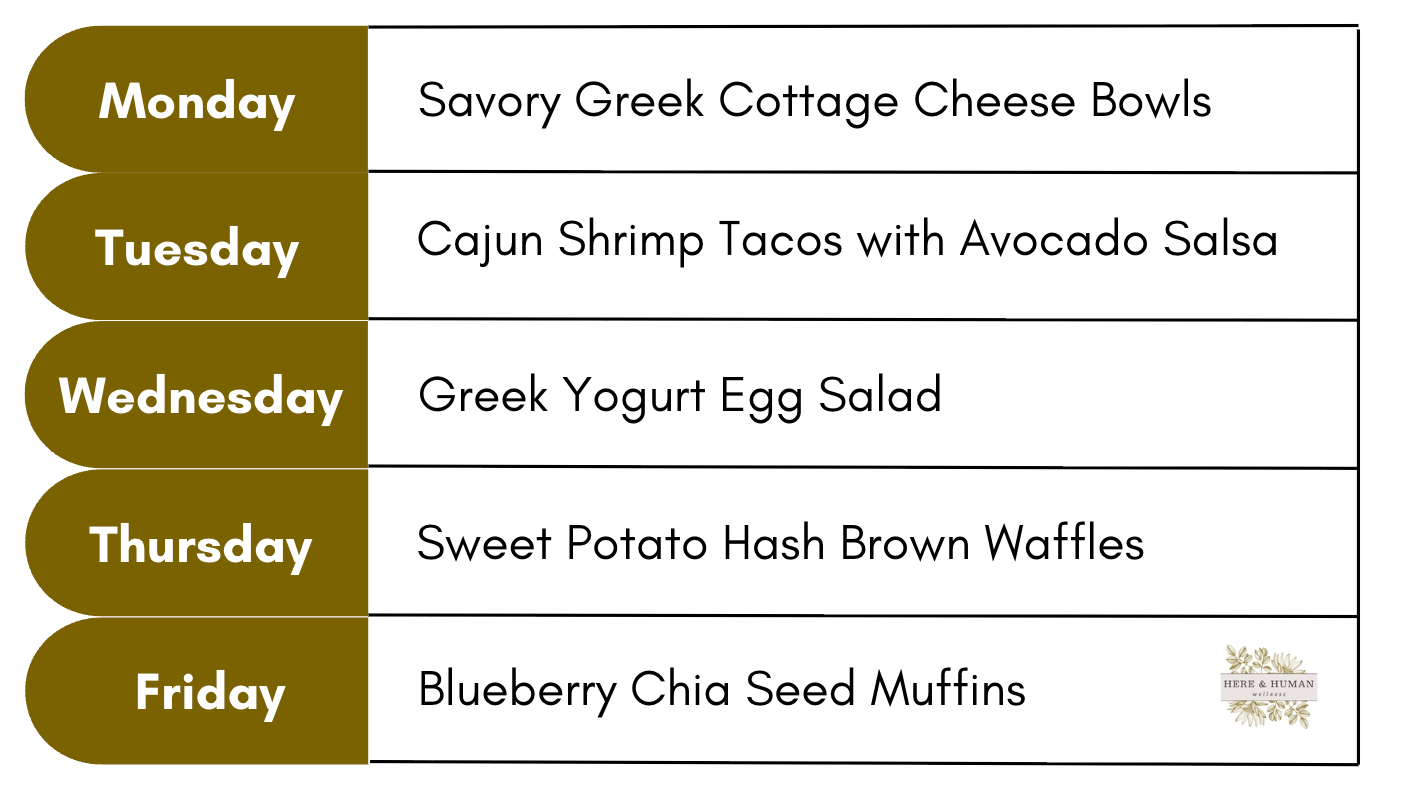
Monday
Savory Greek Cottage Cheese Bowls

Tuesday
Cajun Shrimp Tacos with Avocado Salsa

Wednesday

Thursday
Sweet Potato Hash Brown Waffles

Friday

Stay cool, friends! XO Jen
I think about this a LOT. "Especially online, where some of the more questionable wellness claims gain traction quickly, and the people who speak in absolutes often sound the most convincing." -- I'd even go one step further and say our algorithms (and what they've done to our attention spans) mean that not only do these talking points sound more convincing, they're sometimes literally all we see! I'm also not sure I've mastered it but the noticing it (and talking about it as you do) is so important. Thanks so much for writing this.