


Lately, there has been a bit of an influx of athletes into my practice who are recovering from bone injuries.
A talented goalie trying to heal a stress injury in her spine.
A soccer player recovering from a hip stress fracture.
A runner dealing with recurring shin pain that just won’t seem to resolve.
Often, they’ve been referred by a physician, physical therapist, athletic trainer, or coach with a similar concern: could nutrition be playing a role in recovery?
Sometimes in those conversations, a provider, parent, or coach might express some version of the same frustration:
“They seem willing to do so many things to heal, but when it comes to eating more or pulling back on activity, there seems to be a lot of resistance.”
And honestly, I understand where that frustration comes from on behalf of that professional or parent who cares and wants to see the athlete heal.
If you’ve spent years studying sports medicine, physical therapy, nutrition, or coaching, the path forward can sometimes seem obvious. If a bone is struggling to heal, adequate energy intake and appropriate rest are often part of the solution. It can be difficult to watch someone continue to struggle when the recommendations feel so clear.

But over the years, I’ve learned that what looks like resistance is often something else entirely.
Sometimes the athlete simply doesn’t understand the demands being placed on their body. They may have no idea how much energy they’re expending through training, school, social activities, growth, and everyday life.
Sometimes the challenge is practical. Between school schedules, practices, games, homework, and family commitments, eating enough can be surprisingly difficult. Many student athletes spend eight hours a day in environments where access to food is limited to a short lunch period.
And then there are the athletes who know exactly what they’re being asked to do and still struggle to do it.
These are often the athletes that concern people the most.
They know they should eat more.
They know they should rest.
They know their body needs additional support to heal.
Yet something gets in the way.
What I’ve come to appreciate is that this isn’t usually a knowledge problem.
It’s often a fear problem.
Fear of weight gain.
Fear of losing fitness.
Fear of falling behind teammates.
Fear of returning to competition in a different body.
Fear of doing something differently than they have for years.
And sometimes, if we’re willing to look a little deeper, fear of losing one of the primary ways they’ve learned to navigate life.
Because movement is rarely just movement.
For some athletes, movement is about performance. For others, it has become a way of coping with stress, anxiety, uncertainty, or difficult emotions. For many, it’s both.
Movement can be confidence.
It can be community.
It can be routine.
It can be joy.
It can be a sense of accomplishment.
It can be the place they go when life feels hard.
When viewed through that lens, being asked to stop exercising isn’t simply being asked to stop exercising. It can feel like losing a trusted friend, a coping tool, a routine, a community, or even part of an identity.
I understand that more than I wish I did.
Many years ago, after a difficult boyfriend breakup in college, I found myself in a place where food and exercise became intertwined with control. Looking back, I can see that I was trying to manage grief and uncertainty in the best way I knew how at the time.
The interesting thing is that I already knew a lot about nutrition.
I was studying to become a dietitian.
The issue wasn’t knowledge.
No one needed to explain energy balance to me.
What I needed was support in understanding why I was struggling to do something that seemed so straightforward on paper.
With the help of a dietitian, a therapist, and time, things gradually shifted.
As an adult, a few years ago, I remember going for my first bone density scan and feeling nervous. Had I done permanent damage back in those years? Had that period of restriction left a mark I couldn’t see? Thankfully, my results were normal, but I still remember the fear walking into that appointment.
That experience stays with me when I work with athletes today.
Because while I absolutely understand the frustration that parents, coaches, physicians, and other providers may feel, I’ve also learned that lasting change rarely comes from pushing harder.
It comes from understanding better.
It comes from asking questions before offering more instructions.
It comes from getting curious about what movement provides, what eating more food might threaten, and what fears might be sitting quietly underneath the surface.
This is also why I believe many athletes benefit from working with both a therapist and a sports dietitian.
The challenge is often not a lack of information. These athletes are usually bright, motivated, and deeply invested in their health and performance.
The challenge is understanding why recommendations that seem so simple on paper can feel so difficult in practice.
And I think that’s important for all of us to remember.
The athlete isn’t wrong.
The physician isn’t wrong.
The parent isn’t wrong.
The coach isn’t wrong.
Everyone is usually looking at the same situation through a different lens.
These days, when I sit across from an athlete struggling to make changes that would support healing, I try to remind myself that behavior always makes sense in context.
What I’ve found most helpful isn’t pushing harder or explaining more.
It’s slowing down long enough to understand what makes the change feel difficult in the first place.
Because sometimes what looks like resistance is actually fear.
And fear tends to soften when it feels understood.
Menu for the Week of June 22nd-16th
This week’s menu is inspired by the garden (which is currently producing more arugula than I know what to do with), the flavors of summer, and a simple dessert to make with your kids if you're looking for a screen-free way to spend an afternoon.
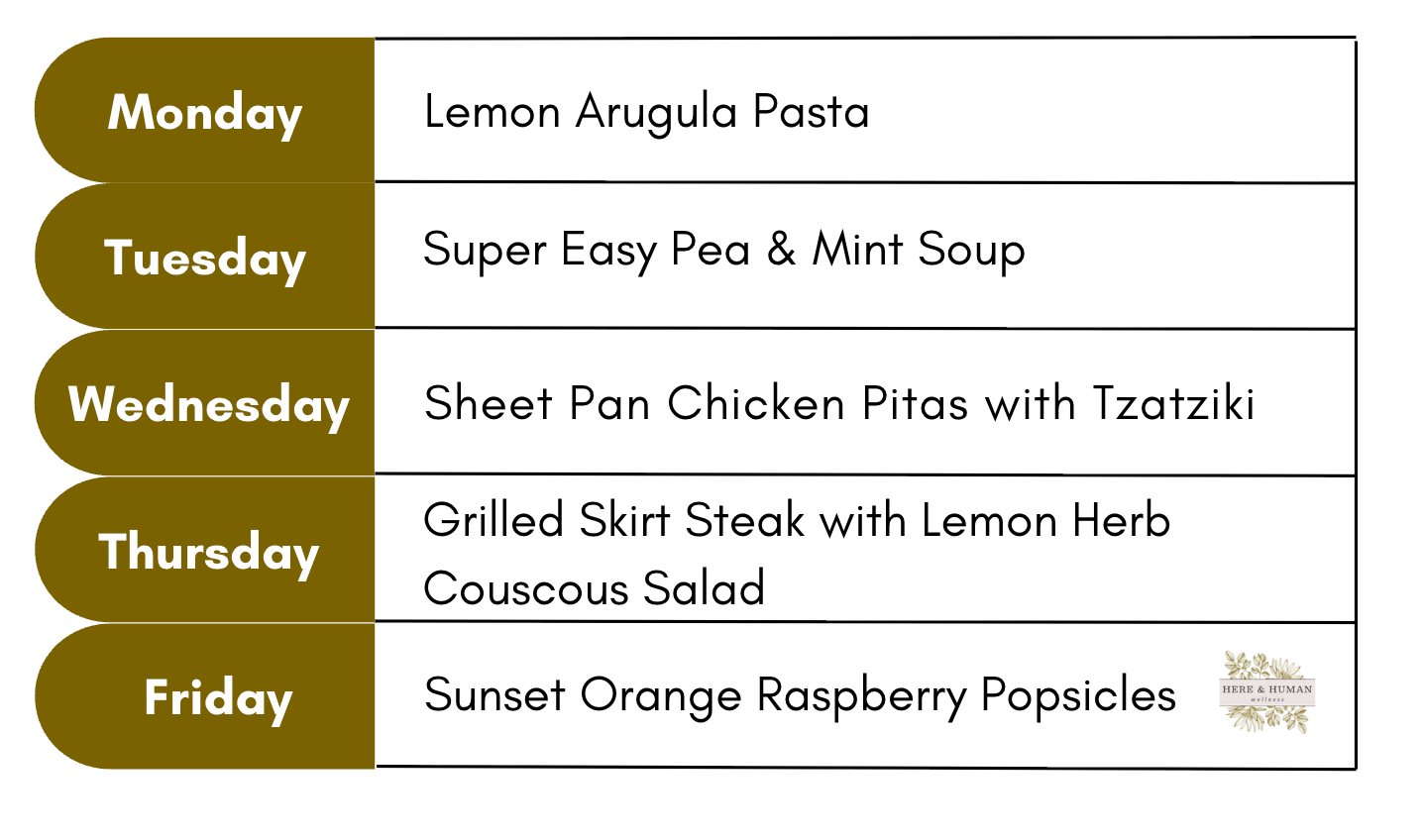
Monday

Tuesday
Super Easy Pea & Mint Soup

Wednesday
Sheet Pan Chicken Pitas with Tzatziki

Thursday
Grilled Skirt Steak with Lemon Herb Couscous Salad

Friday
Sunset Orange Raspberry Popsicles

XO Jen