


Sometimes in session, a moment unfolds that seems to summarize everything we’ve been looking at.
Lately I’ve been working with more clients who are trying to heal their relationship with food. Somewhere along the line, many of them learned that eating a certain way and exercising a certain way were necessary in order to feel okay.
One of the tools that often enters the picture is food journaling.
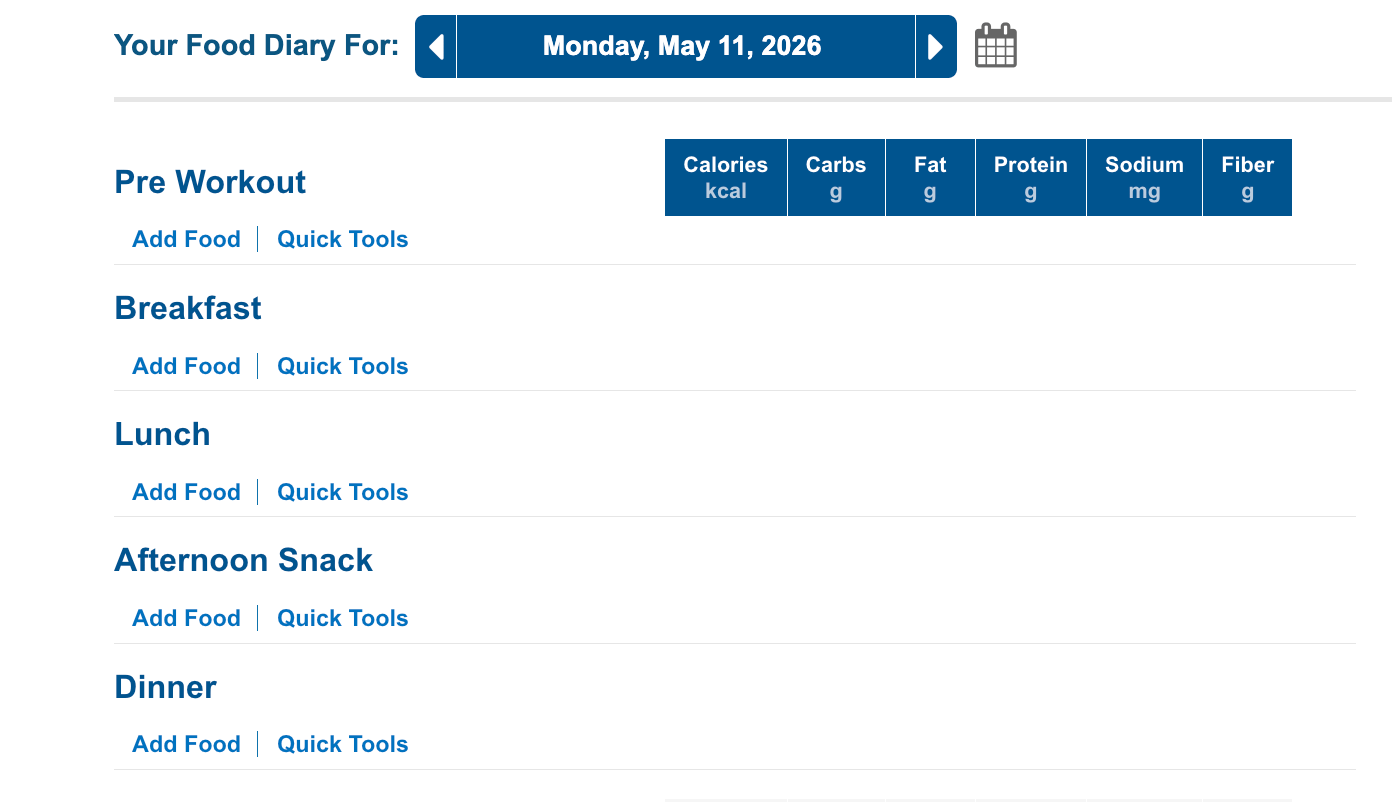
Journaling itself isn’t inherently helpful or harmful. As with most things, it depends on the intention behind it.
Sometimes people are tracking out of curiosity. They’re wondering whether they’re getting enough protein or fiber. Maybe they’re documenting a few days of eating so we can better understand patterns that are difficult to remember later. Sometimes they’re trying to connect the dots between food, fullness, satisfaction, emotions, energy, or digestion.
In fact, I often tell clients that the most valuable part of any food journal isn’t what they ate.
It’s what was happening while they were eating.
How did it feel?
What were they needing?
What were they hoping food would do for them?
But food journals can also become something else.
Instead of curiosity, they become control.
Instead of information, they become reassurance.
One client and I had been exploring this recently. She had been tracking her food for almost a year.
As we talked about it, a question began to emerge:
What does the journal actually provide?
Eventually she landed on something important.
“If I don’t journal, I feel like I don’t know what I’m doing.”
And underneath that:
“If I know what I’m doing, then everything will be okay.”
That’s a very different job description than tracking protein or fiber. Nutrition tools work best when they help us learn. They become burdensome when we start asking them to make us feel safe.
A few weeks later she had a day where for whatever reason…she didn’t journal.
Not intentionally. Life simply happened.
She spent the day playing sports with her boyfriend. She went to her grandmother’s house. She ate cherry pie. She laughed. She lived.
And when she described the day, I noticed something immediately.
There was an expansiveness to it. Not because of what she ate or how she moved. Not because she still followed “a plan.”
There was simply less attention on food. Less hyperfocus. More room. More participation in what was right in front of her.
The interesting thing is that most of us know this feeling.
We know what it’s like when the lens narrows and all of our attention gets pulled toward one corner of life. Food. Exercise. Productivity. Parenting. Work. Health. Money.
The specifics change.
The contraction feels remarkably similar.
And we also know those moments when the lens opens back up.
When we’re so engaged in living that we temporarily forget to monitor ourselves.
I don’t think expansiveness is something we should chase. Trying to force ourselves into being “free” of it all can feel like another form of control.
But I do think it’s worth noticing.
What does contraction feel like in the body?
What does openness feel like?
What activities seem to invite one versus the other?
Years ago, I understood my own food primarily through numbers and records, too. I can speak about all of this because I have been there. Very narrow. Very controlled. Very…I must do this to feel ok.
With time, that habit fell away. Not because I became more disciplined or tried harder, but because I could finally see that it wasn't serving me anymore. I think many of these habits, the ones that start to feel like little cages, change in much the same way.
And how, sometimes, all it takes is a day of pickleball, volleyball, cherry pie, and being fully absorbed in life to remind us that the door was never locked in the first place.
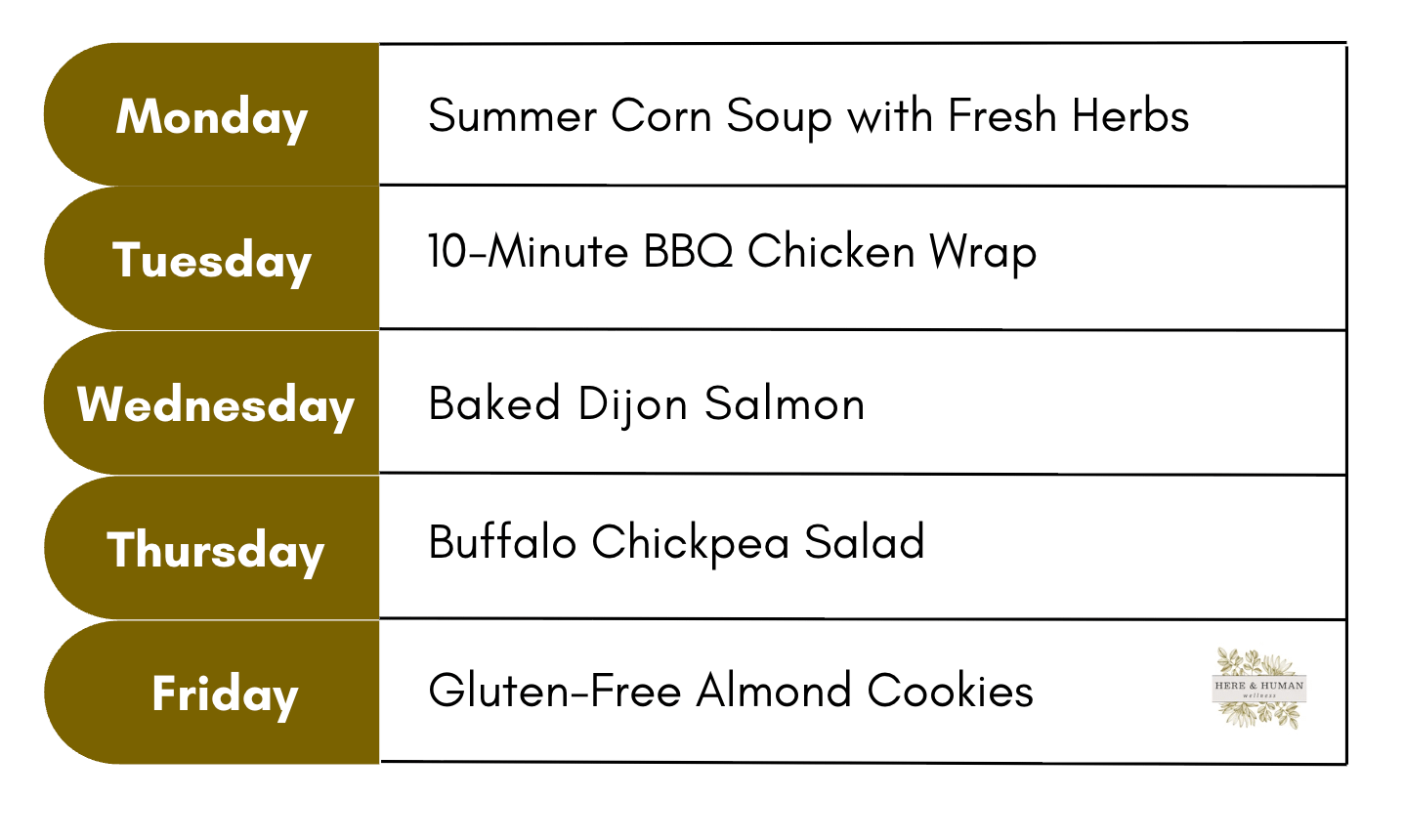
Menu for the Week of July 6-10th
This week's menu is a collection of summer-inspired recipes, inspired by conversations with clients and a delicious meal shared with a friend.
Monday
Summer Corn Soup with Fresh Herbs

Tuesday

Wednesday

Thursday

Friday

Lovely to be here with you - XO - Jen