Paid subscribers: Your free Athlete’s Nutrition Guide is available to download after the recipes at the end of this post!
I’ve been working with a lot more athletes lately, mostly female athletes, but plenty of male athletes as well.
It has been such a joy to watch this part of the practice grow. I love that more parents and athletes seem to understand the important role nutrition plays not only in athletic performance, but in the development of a young athlete.
Because there is so much more being developed than speed, strength or endurance.
Young athletes are also learning how to care for themselves.
They’re learning whether hunger is something to listen to or override. Whether rest is part of training or evidence that they aren’t working hard enough. Whether food is fuel and pleasure and connection, or another thing they need to “optimize!”
And sometimes it takes only a seemingly minor comment to send that learning in a completely different direction.
A coach comments that the Cheez-Its an athlete is eating before practice are “junk snacks.”
Someone talks about power-to-weight ratio without ever directly saying that an athlete might perform better if they lost a few pounds.
A physician mentions that a young athlete’s weight has increased more quickly than expected and recommends an hour of exercise a day; without knowing that the kid sitting in front of them is already training far more than that…
These comments are offered with little idea of how long they might rattle around in an athlete’s head. I’ve worked with adults who can remember at the age of 7 that something like this was said…
So let’s just say, I feel it is important to be thoughtful about this stuff.
Which is why, when I came across a sports organization’s nutrition philosophy and found quite a bit of black-and-white thinking about food: foods being put into all-or-nothing categories, I had concerns.
I also had an idea.
I could help!
I had a relationship with the organization, so I sent an email.
And of course, I used the sandwich style, I started by telling them how great I thought it was that they had a nutrition philosophy at all.
Then came the middle: I explained that some of the thinking around sports nutrition had evolved and that there were places where I thought the philosophy could be updated. I offered to review it as a sports dietitian.
And then, naturally, I finished with another compliment.
It took a while, but eventually I heard back.
They were gracious.
Yes, they said. They’d be open to that. That would be awesome.
I was off and running.
I was genuinely excited about the opportunity to create something that aligned with current sports nutrition evidence while also encouraging athletes to check in with themselves.
To respect hunger.
To respect sleep and recovery.
To understand the importance of fueling and hydration.
To see food as something that supports what their bodies are being asked to do, rather than another system of rules they have to follow.
And, obviously, I needed to make it enjoyable to the eye.
I picked out my favorite fonts. I chose colors. I moved things around in Canva approximately 4,001 times.
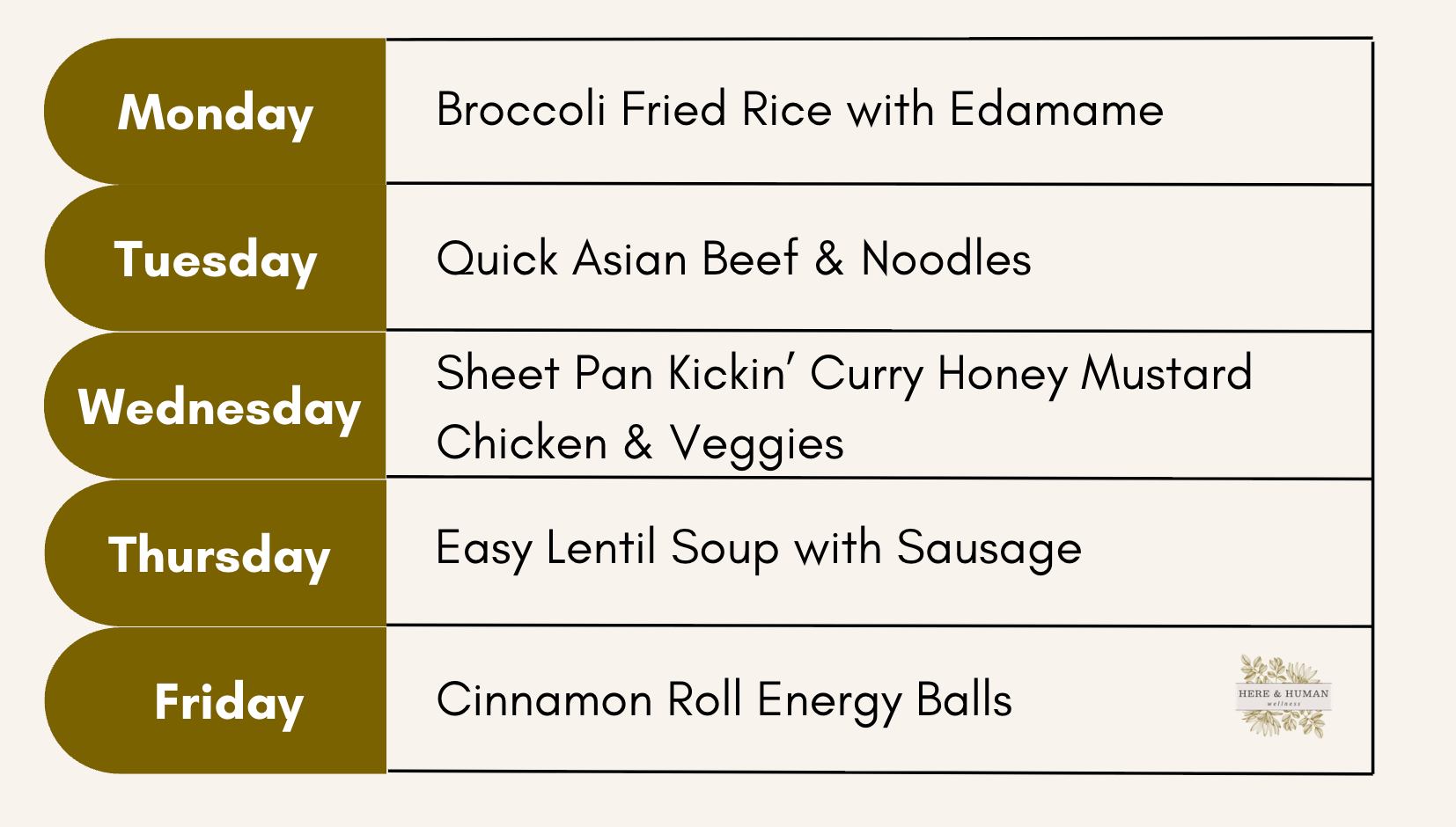
What had previously lived in something resembling a spreadsheet somehow became a 13-page document.
Eek! I didn’t really mean for it to turn into a comprehensive guide, but it did. And I was proud of it.
I sent it over with a few caveats that roughly amounted to: I realize this is probably significantly more than you were expecting, and I am completely happy to pare it down.
And then I waited.
Nothing.
A week went by.
Nothing.
Eventually I reached back out. Gentle poke…I wanted to make sure they knew I welcomed feedback. If there were things they wanted changed, I would be happy to make adjustments.
Still nothing.
And here’s where this stops being a story about sports nutrition
Because every once in a while, those 13 pages still pop into my head.
And when they do, there’s a little ping. A sting.
Did they not think it was good?
Did they even read it?
Did they not understand how much work I put into it?
Did they not see the value in what I was trying to offer?
And perhaps most revealing:
Did they not see the value in whatIhad to offer?
Ah. There it is…
I created those 13 pages because I cared about the athletes who might receive that information.
That’s true.
I care that young athletes could be receiving messages about food that might do more harm than good. I want parents and athletes to have information that supported performance without creating unnecessary fear or rigidity around eating.
I want to help.
And apparently, right alongside that, there was something else.
What was I actually looking for?
I wanted the coaches to see me as someone whose expertise mattered.
I wanted the work to be valuable, but if I’m really looking, I also wanted their response to tell me something about my value.
Not because I need to judge it or fix it. But because there’s something revealing about seeing how quickly something we create can get tangled up with what we think it says about us.
Did they like it?
Did they respect it?
Did they see what I could contribute?
The 13 pages were no longer just 13 pages. Somewhere along the way, they had become a little referendum on me. And maybe that’s why the silence had a sting to it.
I can see versions of this in other places, too.
We make dinner because we want to care for our family, and then feel something when nobody seems to notice.
We offer advice because we genuinely want to help, and then feel frustrated when the person doesn’t take it.
We put time into something at work because we believe in it, and then find ourselves watching to see whether anyone recognizes what we contributed.
None of this is particularly unusual. We like to be appreciated. We like for our efforts to be seen.
Maybe the interesting part isn’t deciding whether we should or shouldn’t want that recognition.
It’s simply seeing what happens.
I created something I believed in, sent it into the world, and then started looking to someone else’s response to tell me something about myself.
When I see that clearly, I’m not sure I need to do much with it.
The work can still be good.
Their response can be whatever it is.
And maybe I don’t have to make either one mean quite so much about me.
Thirteen pages
I still think that nutrition philosophy was good.
Actually, I think it was really good.
I don’t know what happened to it.
Maybe someone read every page.
Maybe someone skimmed the first two.
Maybe it influenced something I never knew about.
Maybe it disappeared into the depths of an inbox.
I may never know.
But I do know that every time those 13 pages come back into my mind and I feel that little sting, there’s an opportunity to see what’s happening.
The document is still the document.
Thirteen pages of work I cared about and believed in.
Everything it seemed to say about me came afterward.
A little more on fueling young athletes: I recently joined KSDK to talk about what kids need to eat enough to learn, feel good, and perform well. If this topic is relevant in your house, you can watch the segment here.