


Well, I’ve reached the fine age of birdwatching, puzzling, and often choosing walking over running. I’m not sure there’s an “average age” when this change-of-life interest in slower things occurs, but I would hypothesize that the earlier it happens, the wiser the human. So kudos to you if you’re in your 20s or 30s and already finding yourself drawn to the aforementioned three things.
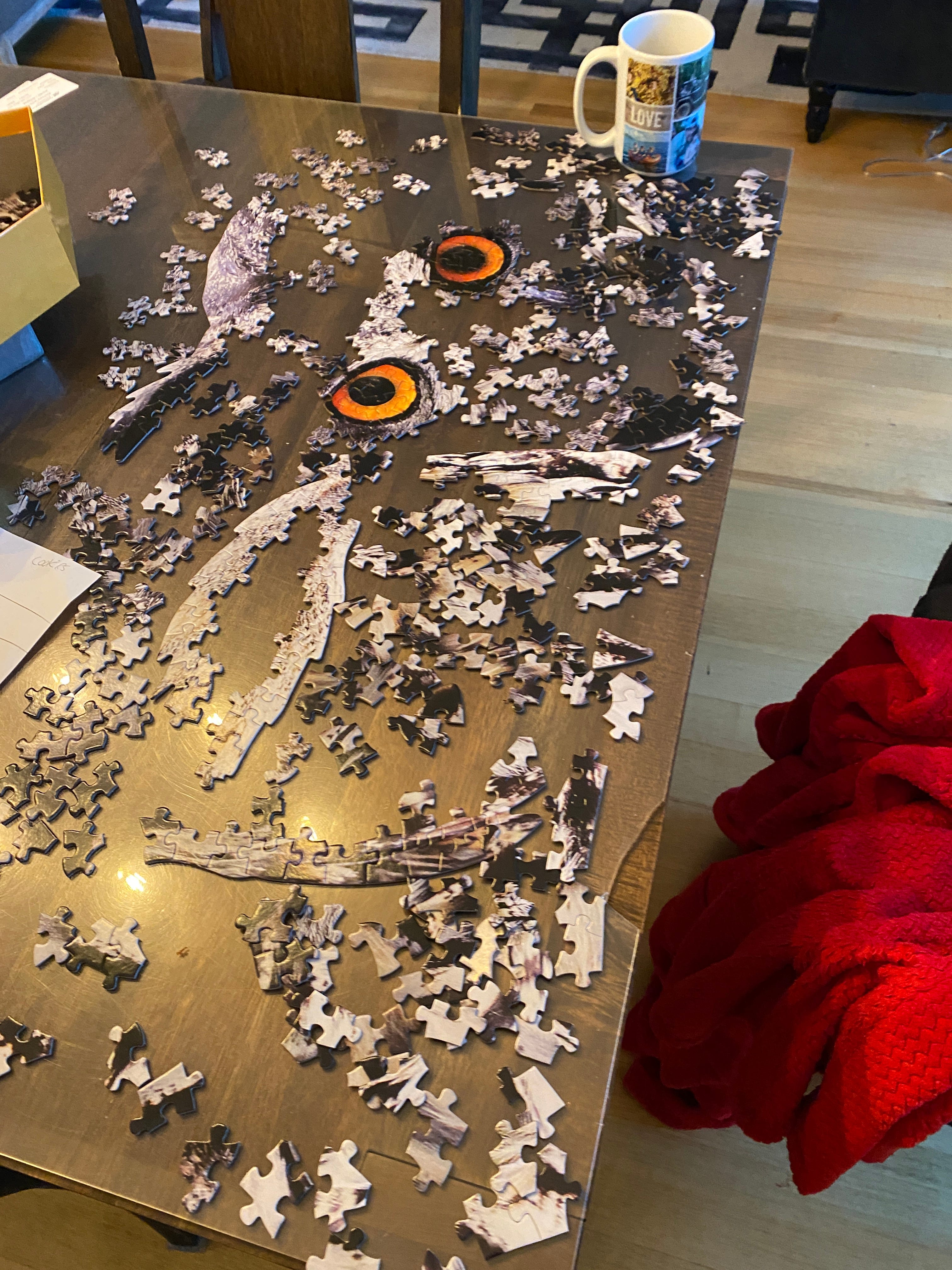
Can you tell what this turned out to be?!
Maybe this is why, over the holiday break (which now feels like forever ago), I found myself especially drawn to two documentaries (one about birds and one about hiking!) The first was Listers: A Glimpse Into Extreme Birdwatching, a documentary about two young men traveling the world in pursuit of birds. It’s quirky and quiet and wonderfully slow in the best way. The second was The Mountain Queen: The Summits of Lhakpa Sherpa, the story of a woman who has climbed Mt. Everest ten times! It was intense and deeply captivating.
I’ve always loved to go for walks, but daily walking became an integral part of my life after pelvic floor surgery, when it was my only approved form of movement. For a full month, my mornings followed the same rhythm: wake, coffee, check the temperature, and layer up in whatever cozy, mismatched clothing made sense that day. How you dress is another thing that tends to matter less as you age.
As the weeks went on, my step count crept up without much effort. What I noticed first wasn’t fitness, it was steadiness. My mood felt more even. My energy did too, probably because the movement wasn’t intense enough to leave me wiped out by mid-morning. There was no striving involved. Just movement that my body didn’t resist.
Around this same time, an article from The New York Times crossed my desk asking a question many of us have asked at some point: which is better for you, running or walking?
The answer, unsurprisingly, was nuanced.
Running has clear benefits.
It improves cardiovascular fitness more quickly, increases VO₂ max, and strengthens bones and muscles.
There’s also good evidence that higher-intensity movement supports heart health and metabolic resilience, especially when it’s tolerated well.
And yet, what felt validating was where the article landed.
Walking offers many of the same long-term health benefits, largely because people are more likely to do it consistently and stick with it.
Lower injury risk, better adherence, improved mood, and meaningful reductions in chronic disease risk all tended to fall in walking’s favor.
That consistency piece matters.
Regular walking is associated with lower blood pressure and better circulation.
It supports blood sugar regulation and insulin sensitivity.
It’s linked to improved mood, lower anxiety, and fewer depressive symptoms.
Gentle, repetitive loading supports joint and bone health.
And across large population studies, people who walk more tend to live longer, with a lower risk of death from many causes.
Then there’s the step question. The famous 10,000-step goal was a marketing number, not a scientific one. Benefits begin much lower. Around 5,000 to 7,000 steps per day is often considered a baseline for being moderately active, and getting closer to 7,000–10,000 steps is associated with meaningful reductions in mortality risk. Even increasing daily steps by 1,000–2,000 from where someone starts is linked to better health outcomes.
As for pace, faster walking does improve cardiovascular fitness and insulin sensitivity more than slower walking. But slower walking still counts, especially when it’s consistent. A common guideline for “brisk” walking is being able to talk but not sing. That said, walking at a pace that allows you to stop, notice birds, and breathe deeply still matters, particularly for the nervous system.
I should say that I prefer a slow pace. I’m always getting passed. I stop and look at things. Is that an owl up there? I’m not walking for exercise. I’m walking for pleasure. And even at my slothy pace, health is still being supported.

AI generated, SLOTH Jen
And I love walking in the dark. There’s something about moving before the world fully turns on. Less light. Less noise. Fewer inputs. Darkness cues the nervous system to stay a little quieter, a little more inward. For me, these walks feel less “necessary” and more restorative.
And that might be the point.
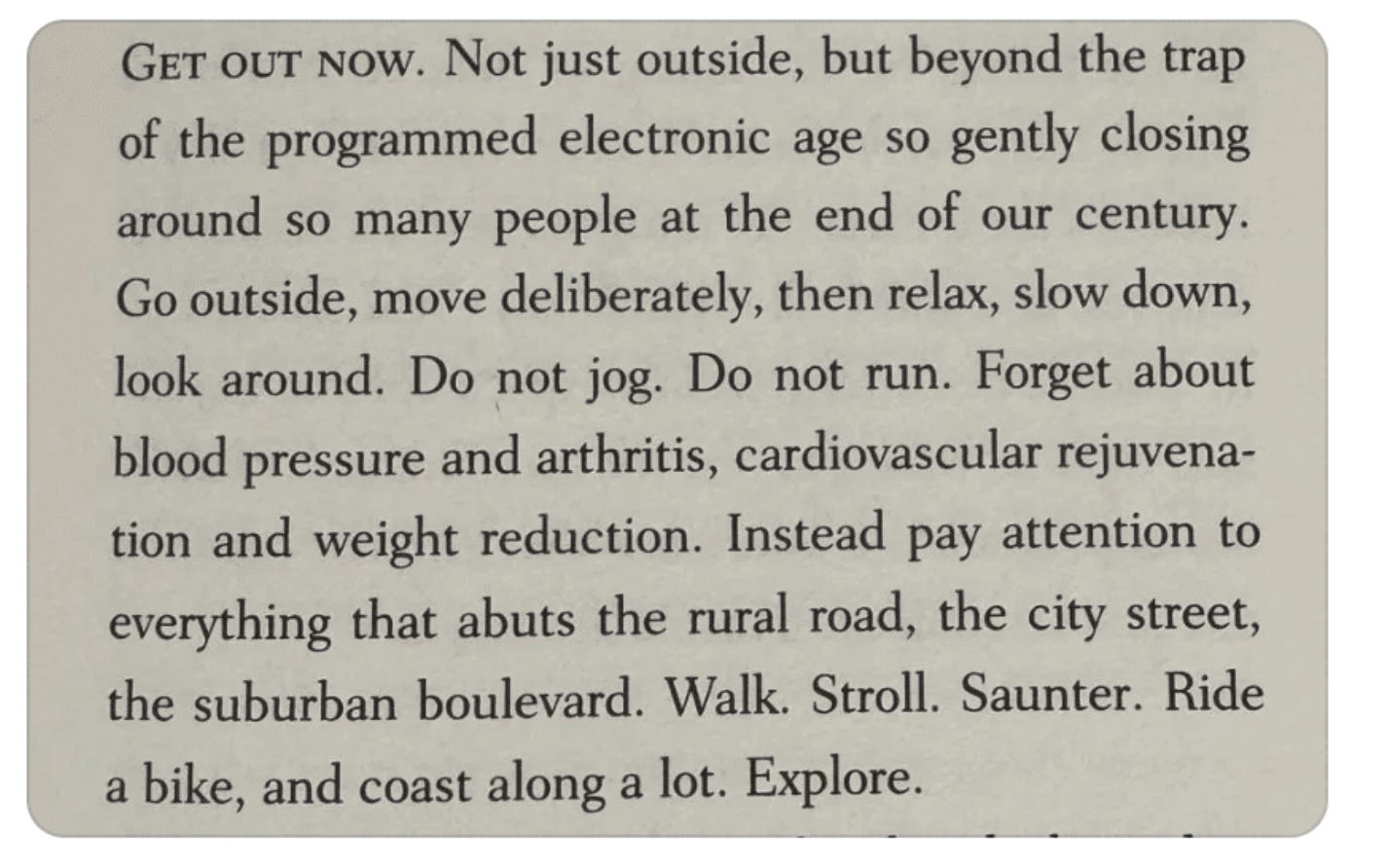
And now, I’ll end with a quote I’ve used before, because who really knows who reads all the way through anyway! If you’re still here, kudos to you. You’re probably one of those people who also watches birds! You have the capacity to read an entire newsletter. That is a wise person. :)
John Stilgoe’s 1998 Book: Outside Lies Magic
Menu for the Week of January 19-23rd
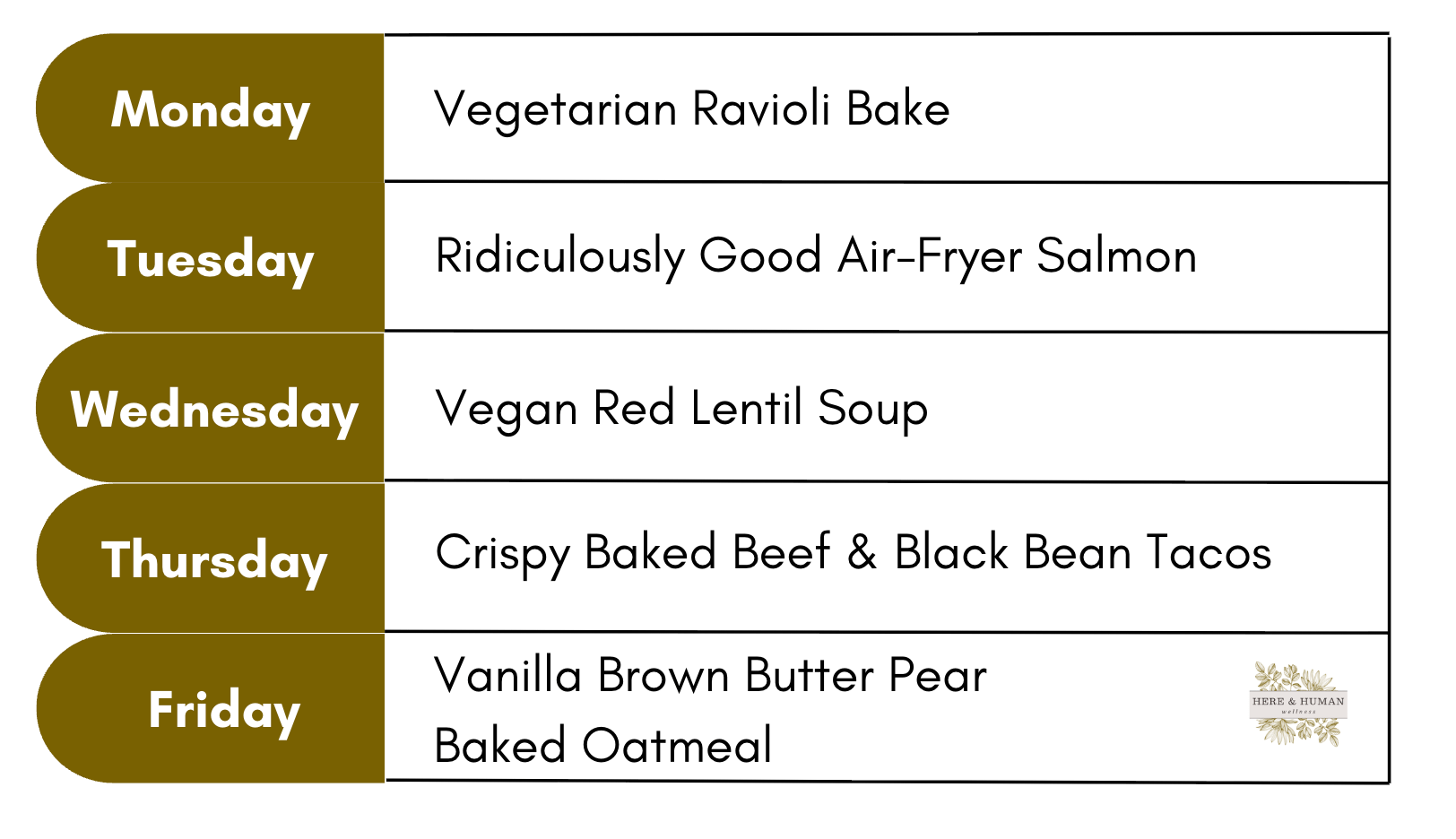
Monday
Vegetarian Ravioli Bake: Store-bought, pre-filled ravioli (think spinach, mushroom, butternut squash, or ricotta) can do the heavy lifting. Then layer with marinara and mozzarella, and bake!

Tuesday
Ridiculously Good Air-Fryer Salmon: I usually make salmon the same way every time, so this is my little shake-up. It’s flavorful, easy, and bite-shaped pieces perfect for a rice bowl or tacos.

Wednesday
Vegan Red Lentil Soup: Courtesy of my fabulous vegetarian dietitian friend Alex Caspero-Lenz. Proof that simple, plant-based food can be deeply yummo.

Thursday
Crispy Baked Beef & Black Bean Tacos: Beef and black beans team up to make these tacos satisfying, fiber-rich, and family-friendly.

Friday
Vanilla Brown Butter Pear Baked Oatmeal: This one feels like a treat, but it’s actually packed with fiber. I like to balance it out with plain Greek yogurt for protein and a little tang.

Happy Moving, friends! XO - Jen
Sloth Jen! Love it (and you).