


Helping youth athletes fuel for performance and long-term health is one of my greatest passions. In addition to writing here, I also work with families and teams directly—through one-on-one consultations and youth sports presentations. Fill out this form to learn more!
Housekeeping…
Want to download the 30-Day Mediterranean Meal Plan instead of just viewing it? Shoot me an email, and I’ll send the file your way (it’s a bit too big for a direct link right now). jennifer@mcdanielnutrition.com
The Energy Equation: Busting 3 Nutrition Myths in Youth Sports
This week, I had the chance to speak to the cross-country team at the Collegiate School of Medicine and Bioscience in St. Louis. They were bright, motivated and engaged athletes. I love working with youth sports teams. Sharing evidence-based nutrition messages with young athletes is so rewarding, especially in a world where they are constantly flooded with health and nutrition information.
Talking with those athletes reminded me of my own days as a competitive gymnast, when I was training 4–5 times a week for four hours at a time. My fueling strategy looked a lot different back then. Before meets, my mom would make us simple meals like rice and eggs, and on road trips she always packed sandwiches, veggies, and fruit in the car. But I also loved those post-practice stops for a double cheeseburger, large fries, and a lime Slurpee from Dairy Queen—or maybe a meatball sub from Subway. After long training sessions, all of those meals felt both satisfying and memorable—and truthfully, they did exactly what my body needed: provide energy.
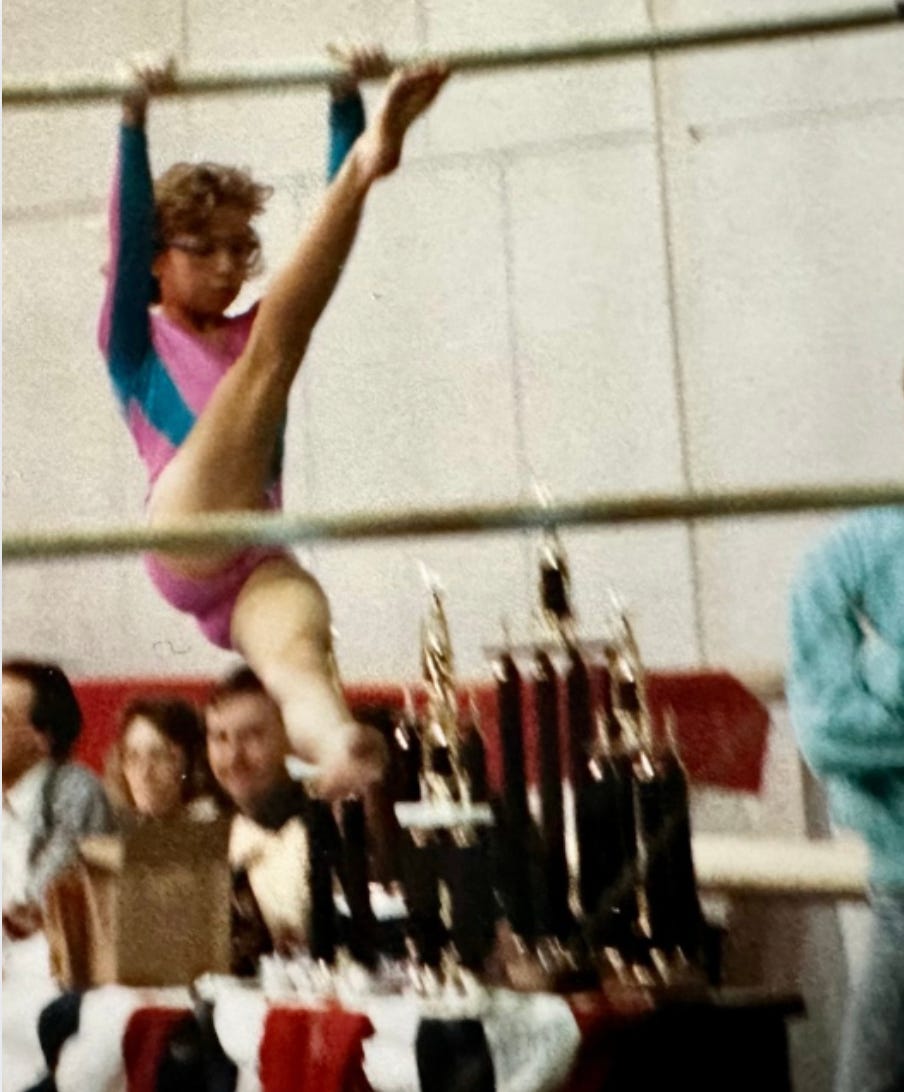
Had to share what my youth sport looked like …
That’s an important lesson right there: making food “too perfect” or overly “clean” can actually shortchange young athletes. The number one issue I see in my work as a sports dietitian? Youth athletes are often don’t eat enough. And it’s usually not intentional. Between time constraints, busy schedules, lack of knowledge, and hunger cues that don’t always keep up with energy expenditure, most young athletes—especially those in endurance sports like cross-country, swimming, and gymnastics—struggle to meet their needs.
The result? Low energy availability (LEA- a state where the body does not have enough energy to meet its physiological needs), such as maintaining muscle mass, bone health, and immune function), inadequate recovery, and gaps in carbohydrate intake (the body’s primary fuel for sport).
In today’s post, I want to tackle three of the most common myths I hear in the youth sports world and set the record straight.
Myth #1: If they’re tired, it’s just because they need more sleep.
Yes—sleep is critical. And yes—teen athletes are often overscheduled and under-rested. Sometimes, the best performance enhancer isn’t a supplement or a new workout plan—it’s simply less on the calendar and more time to rest.
But fatigue isn’t only about sleep. Nutrition plays a major role, and inadequate fueling is one of the most overlooked causes of tiredness and poor recovery in athletes. For youth athletes, high energy output often doesn’t match up with energy intake. Hunger cues don’t always “keep up” with training demands, which means athletes may actually have to push themselves to eat more—and make the most of eating windows when opportunities are available.
This isn’t always easy to encourage, but it can be framed as an experiment: try one week of adding an extra snack or being intentional about fueling right after practice, and then notice the difference in energy, recovery, and mood.
What to check:
Total energy intake. Are they consistently getting enough food throughout the day?
Eating windows. Are there big gaps between meals where fueling opportunities are missed?
Pre-bed snacks. For adults, eating before bed is often discouraged. But for active teens? A balanced snack before bed (like cereal with milk, Greek yogurt with granola, or a PB&J) can help maintain energy balance and support recovery.
Iron matters—seriously. While classic clinical thresholds for iron deficiency are often set much lower (e.g. ferritin <15 ng/mL), more recent evidence—especially relevant for endurance-focused youth athletes—suggests that a serum ferritin under 45 ng/mL may actually signal functionally low iron stores. Some studies even propose a 50 ng/mL cutoff for early detection of subclinical deficiency, which is key for preserving performance, mood, and energy levels in high-demand athletes. So if an athlete’s ferritin is in the 30–45 ng/mL range, that’s not “fine” — it’s your cue to investigate and support accordingly.
So yes—optimize sleep. But don’t forget that fueling is the other half of the energy equation.
We break here to share this week’s free subscriber recipe!
One Pan Autumn Chicken Dinner: This one-pan dinner brings all the best fall flavors together—juicy chicken, caramelized Brussels sprouts, tender sweet potatoes, and sweet roasted apples.

