


April is IBS Awareness Month, and as a gut health dietitian, I get a lot of questions about supplements. Because…IBS can be so overwhelming: disruptive, uncomfortable, unpredictable, frustrating, and at times, even embarrassing.
So of course, it makes sense to wonder, could something as simple as a pill actually help?
(And yes, I realize I covered supplements in last month’s letter…so the conversation carries on!)
IBS Isn’t Just an Inconvenience
For many of my clients, IBS affects:
What they eat
Where they go
How comfortable they feel in their own body
Whether they can travel, attend events, or even make it to their GI doctor’s appointment for fear of having an issue!
I’ve worked with people who:
Skip meals before social events out of fear of bloating
Map out bathrooms everywhere they go
Avoid travel entirely
Live with constant anxiety about how their body will respond
So when we talk about supplements, this isn’t just about pills or powders. It’s about helping people get their lives back.
IBS Is Real
For quite some time, IBS was thought to be an umbrella term for general gastrointestinal (GI) issues. But we now know it is a real, diagnosable condition. While many people don’t talk to their doctors about GI symptoms, it’s important not to remain silent, these conversations can lead to real answers and relief.
IBS is what we call a gut-brain interaction disorder, meaning:
The gut can be more sensitive
Movement through the GI tract may be altered
The nervous system influences how symptoms are experienced
The balance of gut bacteria may contribute to symptoms in some individuals
And importantly, it’s not just about digestion.
Pain is a major part of IBS, too.
There are many ways to support IBS—including nutrition, lifestyle, physical therapy, and psychology, but today, I want to focus on one specific piece of the puzzle: Supplements: and how to use them wisely.
Before You Try a Supplement…
As I mentioned in last week’s post, before adding any supplement, start with this question:
“What symptom am I actually trying to fix?”
Because not all supplements work for all types of IBS.
In fact, most are:
Symptom-specific
Situational
Only helpful when used intentionally
So instead of building a long, overwhelming list…
I’m going to walk through supplements based on specific symptoms with the understanding that some may support more than one issue.
Bloating & Gas
Bloating and gas are one of the most frustrating symptoms and also one of the most misunderstood.
What’s normal? What’s not?
Bloating: A mild increase in abdominal fullness after meals can be normal. However, frequent, severe, or visibly distended bloating, especially when paired with pain or bowel changes, may signal something more going on.
Gas: Gas is normal; your gut is supposed to produce it. But if it’s constant, uncomfortable, or embarrassing enough to change how you live your day, it’s not something you have to just accept.
In many cases, both can be tied to specific food triggers, especially certain carbohydrates (like those found in beans, garlic, onion, or wheat). Often referred to as FODMAPS. When these highly fermentable carbohydrates aren’t fully broken down, they move into the large intestine where they’re fermented by gut bacteria, leading to gas and that uncomfortable “puffed up” feeling.
Digestive Enzymes
Importantly, we first want to understand which FODMAPs may be contributing to symptoms.
It’s very common for people to feel better after removing gluten (a protein) from their diet and assume gluten was the issue. In many cases, however, it’s actually the reduction of fructans, a type of FODMAP found in wheat, that leads to symptom relief.
Fructans are also found in foods like onions and garlic.
As a FODMAP-trained dietitian through Monash University, I enjoy working with clients to collaboratively identify which foods support them, and which don’t.
Once that step is completed, targeted digestive enzymes can be a helpful next step.
Think of these enzymes like “carbohydrate scissors.” They break down larger, hard-to-digest carbohydrates into smaller pieces so they can be absorbed earlier, before they reach the colon and produce excess gas.
Examples include:
α-galactosidase → helps break down carbohydrates in beans and certain vegetables
FODMAP-targeted enzyme blends → designed to support digestion of specific fermentable carbs
It’s worth noting, there are other types of digestive enzymes (like pancreatic enzymes that break down fats, proteins, and carbs more broadly). But these are typically used for specific medical conditions, not routine IBS management.
When used correctly, these can reduce fermentation in the gut, which may help decrease gas and bloating. But these are not meant to be taken randomly or daily “just in case.”
They work best when:
You know your triggers
You take them with the meal (ideally with the first bite)
You’re using the right enzyme for the right food
Lactose Sensitivity
For those who notice symptoms after dairy, a lactase enzyme, such as Lactaid, can be helpful.
But this is another example of a targeted tool, not a universal solution. Lactose content varies widely across foods.
(Paid subscribers, check out the end of this post for your free lactose content chart.)
For example, lactose is high in milk but nearly absent in butter. If lactose isn’t your trigger, taking lactase won’t make much of a difference.
Abdominal Pain & Cramping
If you experience ongoing pain or cramping, it’s important not to suffer in silence, be sure to discuss these symptoms with your doctor or dietitian.
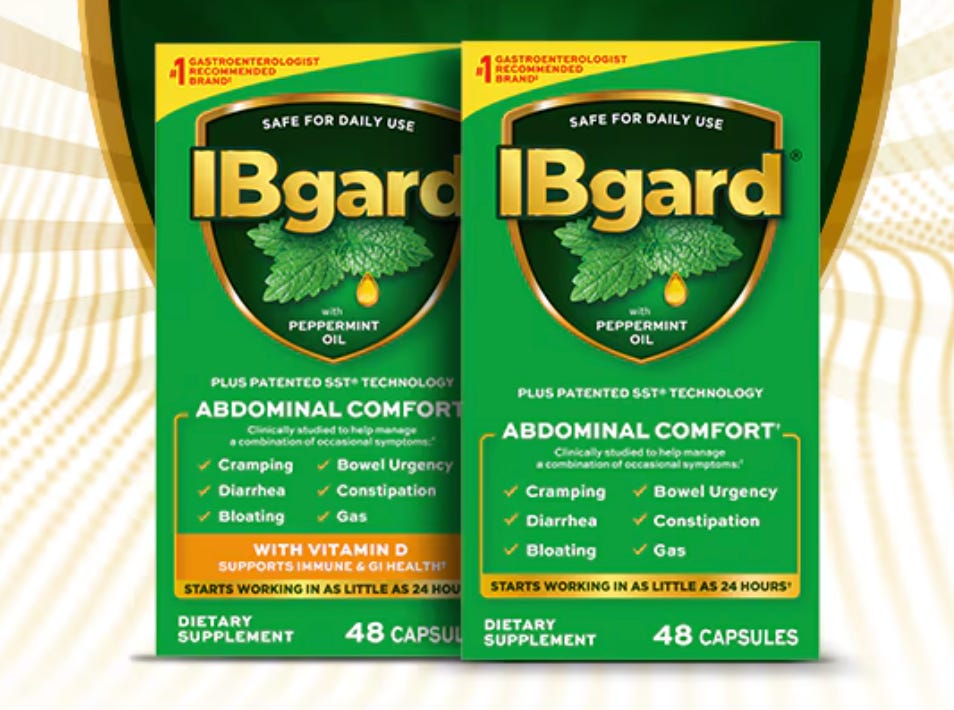
That said, it’s also common in IBS to experience flares or to recognize that certain foods may trigger discomfort. In those situations, one of the more consistently helpful options is encapsulated peppermint oil.
Peppermint works as an antispasmodic, meaning it helps relax the muscles of the GI tract. This can reduce cramping, pain, and even some bloating.
But how you take it matters.
Peppermint tea can be soothing, but it’s often not strong enough, and much of it is absorbed too early in the digestive tract to have a meaningful effect where IBS symptoms tend to occur.
Encapsulated peppermint oil is different.
It’s concentrated
It’s often enteric-coated, meaning it passes through the stomach intact
It’s designed to release in the intestines, where it can actually relax those muscles
A few important details:
Look for enteric-coated capsules
These are usually taken before meals, but can also be helpful to have on hand when symptoms start to flare.
This is one of the better-supported over-the-counter options for IBS-related pain
Here is a well-known brand:
Constipation (IBS-C)
IBS presents in different ways, most commonly as IBS-C (constipation), IBS-D (diarrhea), or IBS-M (mixed type).
When it comes to constipation, the type of fiber matters. While nutrition as a whole is important, sometimes a targeted approach, like using a fiber supplement, an be especially helpful for managing symptoms.
Why? Because fiber in foods is naturally a mix of different types, and that’s not always ideal when you’re trying to target a specific issue.
With supplements, we can be more precise.
We can choose a type of fiber based on the goal:
Improving stool consistency
Softening the stool making it easier to pass
Or helping with urgency
In other words, supplements allow us to modulate symptoms more intentionally, rather than taking a broad approach.
Not All Fiber Works the Same
Different fibers behave very differently in the gut.
The ones that tend to support IBS, and I tend to use most often in practice are:
Psyllium
PHGG (partially hydrolyzed guar gum, also known as Sunfiber)

What’s interesting is that these fibers aren’t just helpful for constipation, they’ve also been well-studied for IBS-D diarrhea.
That’s because they act more like a regulator than a simple laxative.
They can:
Soften hard stools
Add form to loose stools
Improve overall consistency and regularity
So instead of thinking of fiber as just “getting things moving,” it’s more helpful to think of the right fiber as helping to normalize digestion—whether things are moving too slow or too fast.
Don’t Skip This Step: Hydration
A common mistake is increasing fiber or adding supplements without also increasing hydration. Fiber works by holding onto water, so if you don’t increase fluids alongside it, you may actually feel worse.
As a general guide:
Aim for at least ~8 cups (2 liters) of fluid per day
This can include water, herbal teas, broths, and soups
Needs may be higher depending on activity level and environment
Without enough hydration, fiber can actually worsen constipation or increase bloating.
How to Use Fiber Supplements Well
Start low and increase slowly
Be consistent (this isn’t a one-time fix)
Give it time, this often works over days to weeks
If Additional Support Is Needed
We may layer in:
Magnesium (often citrate or oxide form)
PEG (Miralax)
IBS-D (Diarrhea)
In addition to the fibers we mentioned above, psyllium and partially hydrolyzed guar gum (Sunfiber), it is often common for doctors to prescribe Imodium.
Loperamide (Imodium) works by:
Slowing down gut movement
Increasing fluid absorption
Reducing urgency
This can be especially helpful for:
Travel
Events
Flare days
But again, this is about symptom management, not addressing root causes - which is so important for most of my clients.
What about probiotics?
Probiotics are widely taken, but often without a clear reason or a clear understanding of what’s actually in the supplement. The key is that probiotics should be targeted to your symptoms. Taking a general probiotic without considering the strain or its purpose may not be very helpful.
Different strains do different things in the gut.
So instead of asking, “Should I take a probiotic?” a better question is:
“Is there a specific strain that supports what I’m experiencing?”
Some strains that have shown benefit include:
• Bifidobacterium coagulans
• Lactobacillus plantarum
But overall:
The effects tend to be modest
Results vary significantly from person to person
More is not necessarily better
If you want a more detailed, evidence-based breakdown of specific strains and products, this is a helpful resource from the International Scientific Association for Probiotics and Prebiotics (ISAPP):
https://isappscience.org/resource/clinical-guide-to-probiotic-products-available-in-usa/
Where to go from here
If you’re feeling like this is still a lot to sort through, you’re not alone. Please partner with someone who can help you figure out what helps your symptoms and what doesn’t.
In practice, this often means working in partnership with your physician or GI specialist or dietitian to look deeper, beyond the blanket statement of “it’s just my IBS.”
Together, we can start to connect the dots between:
Food
Stress
Gut function
And overall health
So that you’re not just reacting to symptom…but actually building a plan that helps you feel better, more consistently, over time.
Paid subscribers: Lactose content chart included at the end.
Menu for the Week of April 13-17th
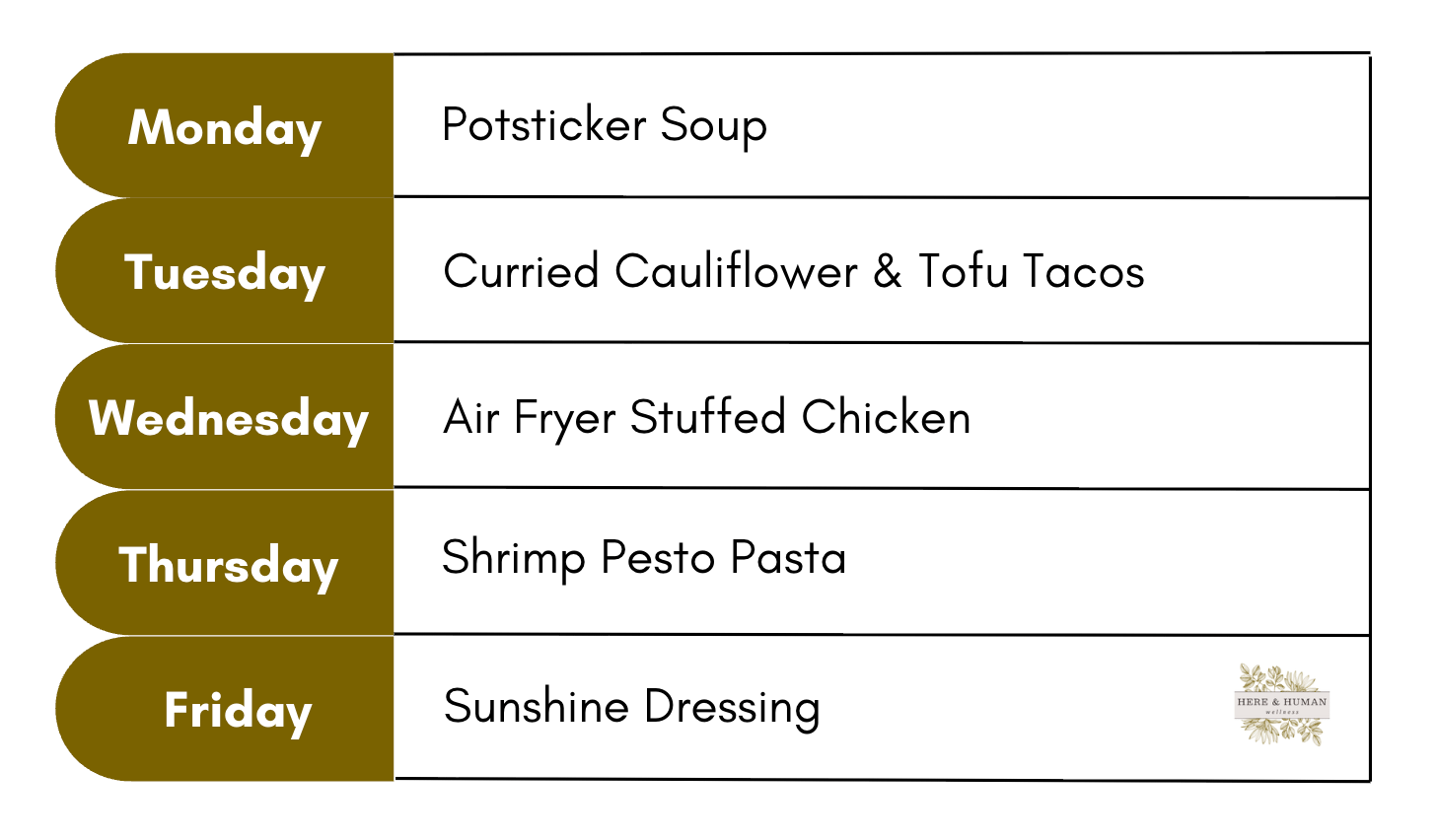
Monday
Potsticker Soup: I love using pre-made frozen potstickers as the star of this simple, chilly spring day soup!

Tuesday
Curried Cauliflower & Tofu Tacos: After a recent trip to Asheville, NC, I had a taco similar to this, so this is my attempt to recreate it at home!

Wednesday
Air Fryer Stuffed Chicken: Elevating the simple air-fried chicken breast with a delicious, flavorful stuffing.

Thursday
Shrimp Pesto Pasta: Use store-bought pesto (or make your own if you’d like, it’s worth it!) and pair it with one of the fastest-cooking proteins: shrimp.

Friday
Sunshine Dressing: One of my clients and I were talking about how important the sauce is when it comes to meals. This is one of my go-to dressings for any power bowl.

