


I remember when my kids were younger and we were trying to figure out how to get them to do chores…which, honestly, I’m still trying to figure out. We had charts. We had “you can do this when you’ve done that” statements. We had end-of-the-week reward programs. I would stick with each new system for maybe a week, and then it would fall away and I would probably just end up nagging them.
I even remember taking a course about why chores are so valuable for kids and how to help them not hate doing them. But again, nothing lasted. Nothing was consistent.
Why? Maybe it was too hard to keep up with. Maybe there were too many moving parts. Maybe something about it didn’t feel right, even if I couldn’t quite explain why. Whatever the reason, it didn’t continue.
And then, of course, I would add guilt to the whole thing: It’s so important to be consistent with kids, and I don’t seem to be able to do that.
The Most Important Thing? Be Consistent!
And we hear about the importance of consistency everywhere else, too.
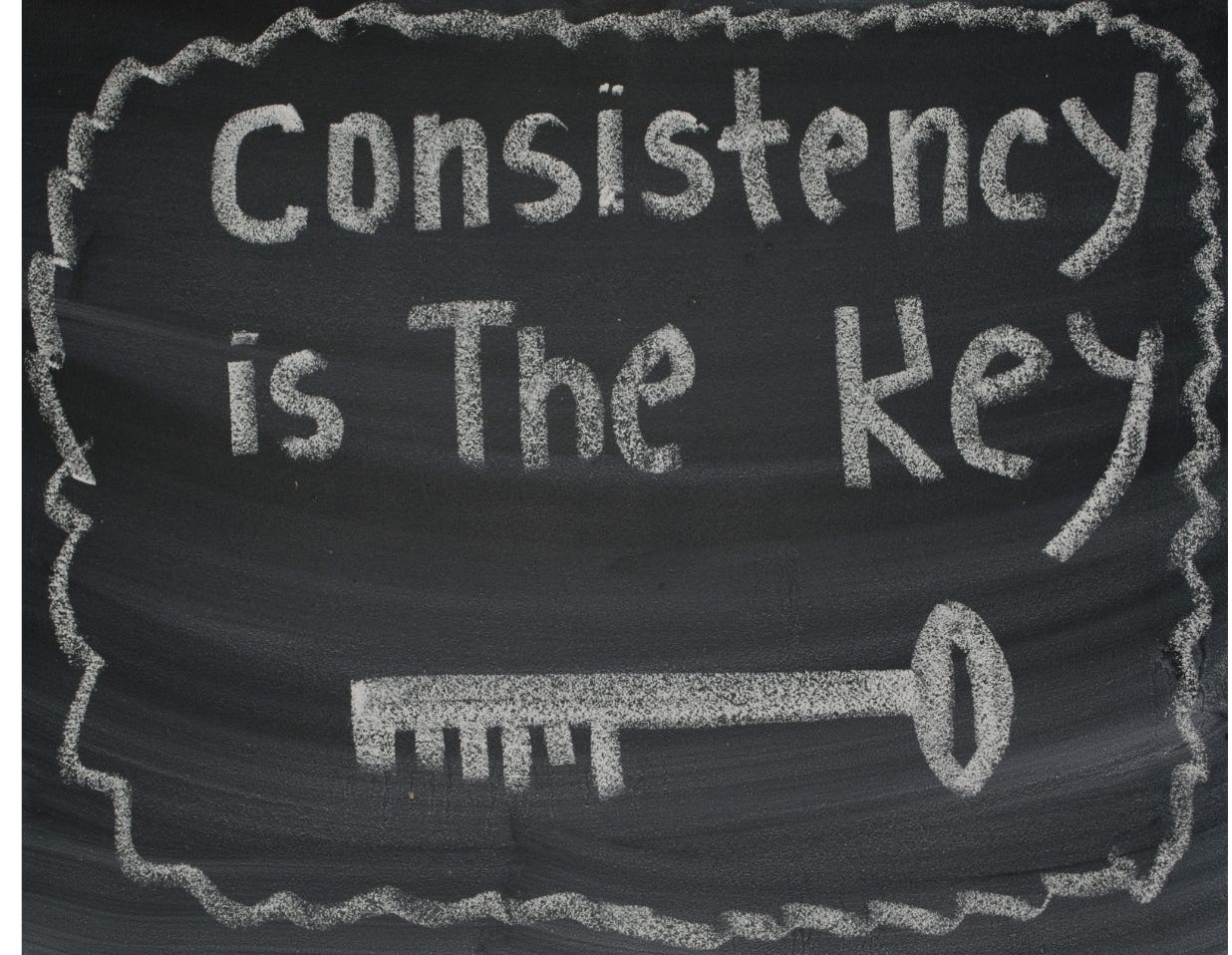
It’s not about how hard you work out; it’s about continuing to show up. It’s not about cooking the perfect meal; it’s about lowering the bar enough that you can still eat at home instead of relying on takeout. It’s not about how long you meditate; it’s about making space for even a little mental quiet each day.
Again and again, we’re told that what we do matters less than whether we can keep doing it.
All of this makes sense, and I agree with it. I can certainly see how it works in my own life. When I don’t feel like working out, modifying the workout so that I do a little something instead of nothing helps me move beyond the all-or-nothing thinking that so often gets in the way of our goals.
But there’s still something about the way we talk about consistency that I question.
Consistency assumes that life is relatively consistent. And it isn’t.
School starts. Someone gets sick. Work explodes. You travel. A child needs more from you. Your body changes. You’re grieving. It’s winter. It’s summer. The amount of time, energy, money, interest, and support available to us is constantly shifting.
So why would the healthiest response to an inconsistent life necessarily be consistent behavior?
“Consistency, not perfection” was probably intended to soften perfectionism. But sometimes consistency simply becomes perfectionism in friendlier clothes.
Did I work out enough this week?
I was doing so well.
I fell off.
I need to get back on track.
Without realizing it, we’ve created another imaginary line against which to judge ourselves.
We also begin telling stories about who we are based on the behaviors we maintain: I’m someone who exercises five days a week. I meal plan. I meditate every morning.
Then Tuesday arrives and none of those things happen.
Instead of Tuesday simply being Tuesday, it becomes evidence that something has happened to us: I was doing so well. What happened?
But maybe nothing happened. Maybe something simply fell away because the conditions changed.
Maybe you cooked regularly for three months, and then school started and you picked up takeout four nights in one week. Wellness culture might describe that as falling off track. But perhaps takeout was actually the most intelligent response to the conditions of that particular week.
Responsiveness Vs. Consistency
This is where I wonder whether responsiveness might be more useful than consistency.
What if health isn’t primarily about maintaining the same behaviors, but about responding to what is here?
Sometimes the responsive choice is a run. Sometimes it’s walking for twenty minutes instead of running for an hour. Sometimes it’s sleep. Sometimes dinner is homemade salmon and vegetables. Sometimes it’s Chipotle.
The ability to adjust may be a more valuable skill than the ability to remain consistent.
Of course, our habits and choices matter. But consistency can subtly carry the promise that if we establish the right routines and stick with them, we can produce the outcomes we want. Bodies and lives don’t always cooperate with that equation. Aging, hormones, genetics, injury, illness, relationships, schedules, and plain randomness don’t necessarily follow our plans.
Maybe what we’re actually looking for is not consistency, but rhythm.
Perhaps, Rhythm?
Rhythm allows for a change in tempo. It can pause and begin again. It can respond to different seasons. There can be an underlying pattern without demanding uninterrupted continuation.
Movement might be part of someone’s life for twenty years. But within those twenty years, there may be months of running, periods of walking, weeks of doing almost nothing, stretches of strength training, vacations, pregnancies, injuries, caregiving, enthusiasm, and boredom.
Zoom out far enough and there may be a kind of continuity. But it probably doesn’t look anything like the wellness-calendar version of consistency.
And perhaps returning is more interesting than consistency, too.
Instead of saying:
I haven’t worked out in three weeks. I’ve become so inconsistent.
What if it were simply:
I feel like moving today.
There is no debt to the previous three weeks. Nothing to compensate for. No identity to restore or streak to resurrect. There is simply an opportunity to respond to what feels supportive now.
So perhaps the question isn’t:
How can I stay consistent when life gets busy?
Maybe it’s simply:
What makes sense now?
And now is forever anew.
Menu for the Week of August 31-September 4th
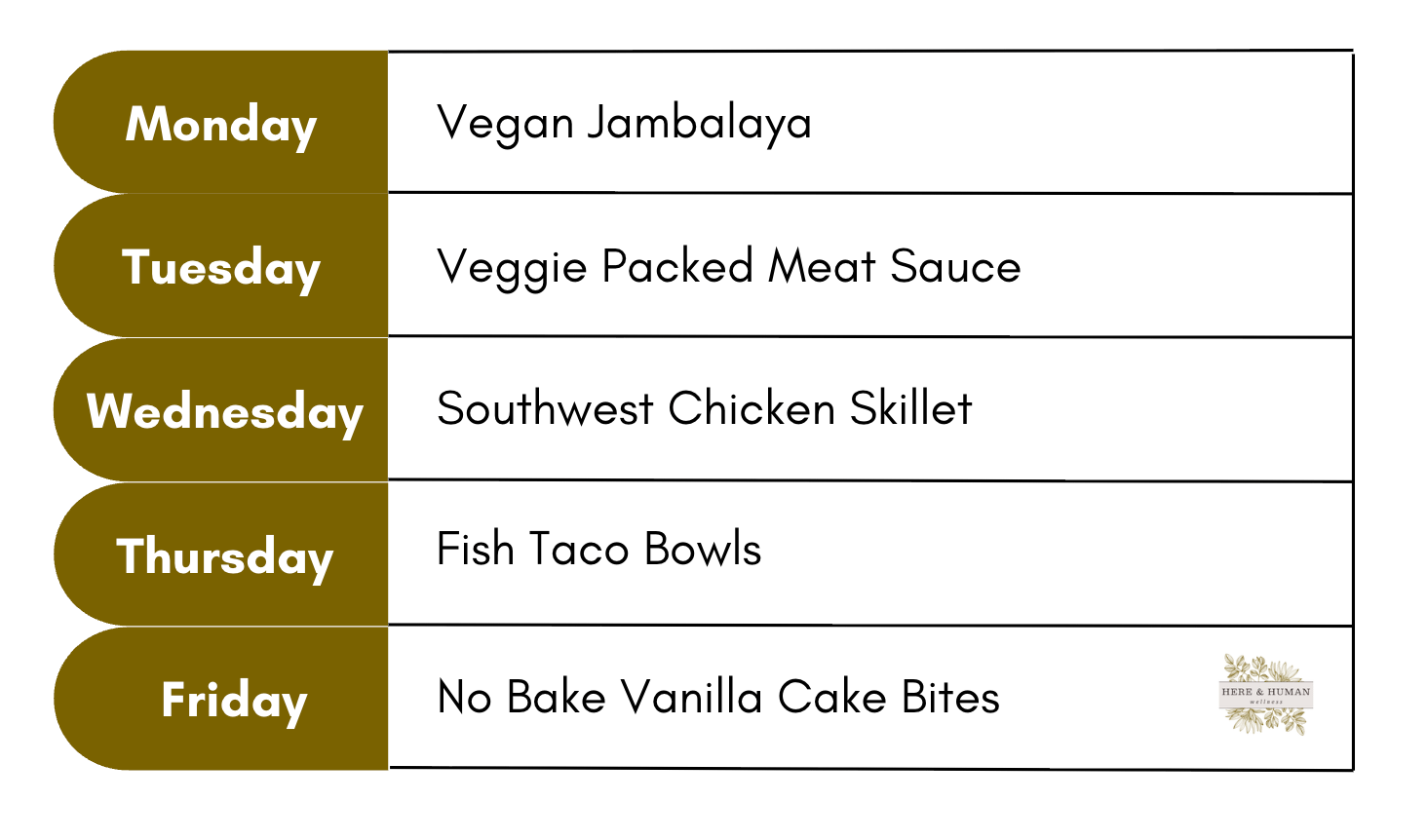
Monday

Tuesday

Wednesday

Thursday

Friday

In loving memory of Dolly Parton, Happy Fall, Y’all!
SO WELL SAID. All of it. 👏🏻
This, especially, resonated: “But sometimes consistency simply becomes perfectionism in friendlier clothes.”
This really landed for me! Such a powerful reminder that consistency can become perfectionism in disguise...and that responding to life is not failing. Beautifully said.