


March is National Nutrition Month, an initiative from the Academy of Nutrition and Dietetics. Each year they release a theme meant to guide conversations about food and health. Their themes do not catch headlines or hook you in like the headlines on podcasts or by a wellness influencer trying to sell you their supplement.
There’s no “cut this out immediately to live longer” or “this one food will change everything about your hormones.”
Instead, their themes tend to be broad.
Sometimes even a little…boring!
Recent themes have included:
Food Connects Us
Celebrate a World of Flavors
Fuel for the Future
At first glance, yes, underwhelming in a nutrition landscape that rewards those bold claims and quick fixes. But I would imagine that is intentional.
They’ve long understood something important:
Sustainable shifts rarely look dramatic.
They often look subtle.
And subtle shifts, practiced with some degree of consistently, are where meaningful health changes tend to happen.
So let’s settle into a word I love: subtle!
I love the feeling it leaves behind.
Grounded, not earth-shattering.
Calm instead of chaotic.
Barely noticeable, rather than in-your-face.

Subtle isn’t celebrated often. Instead the world of wellness celebrates transformation! Before-and-after photos! Thirty-day resets! Feeling like a brand-new person…
But real physiology doesn’t work that way.
When client share a subtle noticing…
“My mood feels a little steadier.”
“I didn’t get quite as shaky before dinner.”
“I fell back asleep faster.”
“I wasn’t as urgent around food last night.”
I love to take a moment and highlight the importance of those.
It’s so easy to dismiss subtle progress because it doesn’t feel big enough. But in the body, small adjustments are often the sign of regulation returning. Of systems recalibrating. Of homeostasis doing what it was designed to do.
Here are a few places I’ve seen “subtlety” doing its work (behind the scenes, of course).
Hormones & the Wisdom of Small Shifts
I was on a walk with a dear friend, and like many conversations with my female friends, we found ourselves talking about perimenopause and hormones.
She mentioned she was trying something new. She thought it might be helping, but the changes were small. Almost underwhelming.
And while she wasn’t oohed and awed with zero brain fog or sleeping uninterrupted for 9 hours every night, she did notice some subtle improvements. Hormones are not meant to swing wildly. They are part of a complex feedback system that relies on tight regulation and small adjustments. Dramatic shifts often signal dysregulation, not steadiness.
So when something improves subtly, a slightly steadier mood, fewer night sweats, marginally better cycles, that is meaningful.
Hunger: The Whisper Before the Yell
A client recently described noticing the subtle difference between “not hungry at all” and “just beginning to feel hunger.” Her way of doing things, for many years, was to wait for hunger to rear its head…stomach growling, shaky, irritable, before she ate. At that point, food decisions felt urgent and less thoughtful. She was HANGRY!
But part of her intention was to tune into earlier cues…the softer signals. Eating became proactive instead of reactive. She felt steadier and portions felt more intuitive.
Physiologically, this makes sense. When we wait until we’re overly hungry, ghrelin levels are high, blood sugar may be dipping, and the brain is more driven toward quick energy. When we respond earlier, insulin and glucose remain more stable, and the prefrontal cortex, the decision-making part of the brain, has more access.
The difference between a whisper and a yell seems small, but this subtle timing changed her experience.
Sleep: Five Minutes That Add Up
Another client was frustrated with her 2 a.m wake-ups. She had made some small changes, morning light exposure, a light snack before bed, and reduced some late-night work, but she was still waking.
The “subtle” thing she noticed though was that she could fall back asleep…faster.
It didn’t feel dramatic, but when we look at sleep architecture (the cycling between REM and non-REM stages) even small reductions in wake time after sleep can meaningfully improve overall restorative sleep over weeks and months.
Stringing together a few more minutes each night helped her feel more refreshed and regulated. Subtle improvements compound!
Urges & Evening Cravings
Another client who was working on nighttime cravings didn’t purge her pantry or set a limit…no more eating after 8 pm!
Instead, she added:
A slightly more substantial lunch.
A steadier afternoon snack with protein and fiber.
And full stop permission, that if she was hungry, to eat!
With some time and curiosity, she noticed a lessening around her evening urges.
Subtle nourishment reduced dramatic urges.
How to Sense the Subtle
It’s hard to notice these small changes if we’re not sensing ourselves. And depending on our conditioning… we may need a little encouragement.
Encouragement might look like setting a few chimes on your phone during the day. When they go off, you simply check in.
How am I?
What might I need right now?
If something sparks curiosity, you might journal for a few days. What do you notice?
Sometimes I leave a small sticky note on my computer with a few phrases to bring me back to myself — not to my thoughts, but to the sensing of my direct experience.
And if you notice that something has shifted, even slightly, you can give it a little attention. A moment of appreciation for the quiet recalibration happening beneath the obvious.
Subtle isn’t insignificant.
Sometimes it’s where harmony lives.
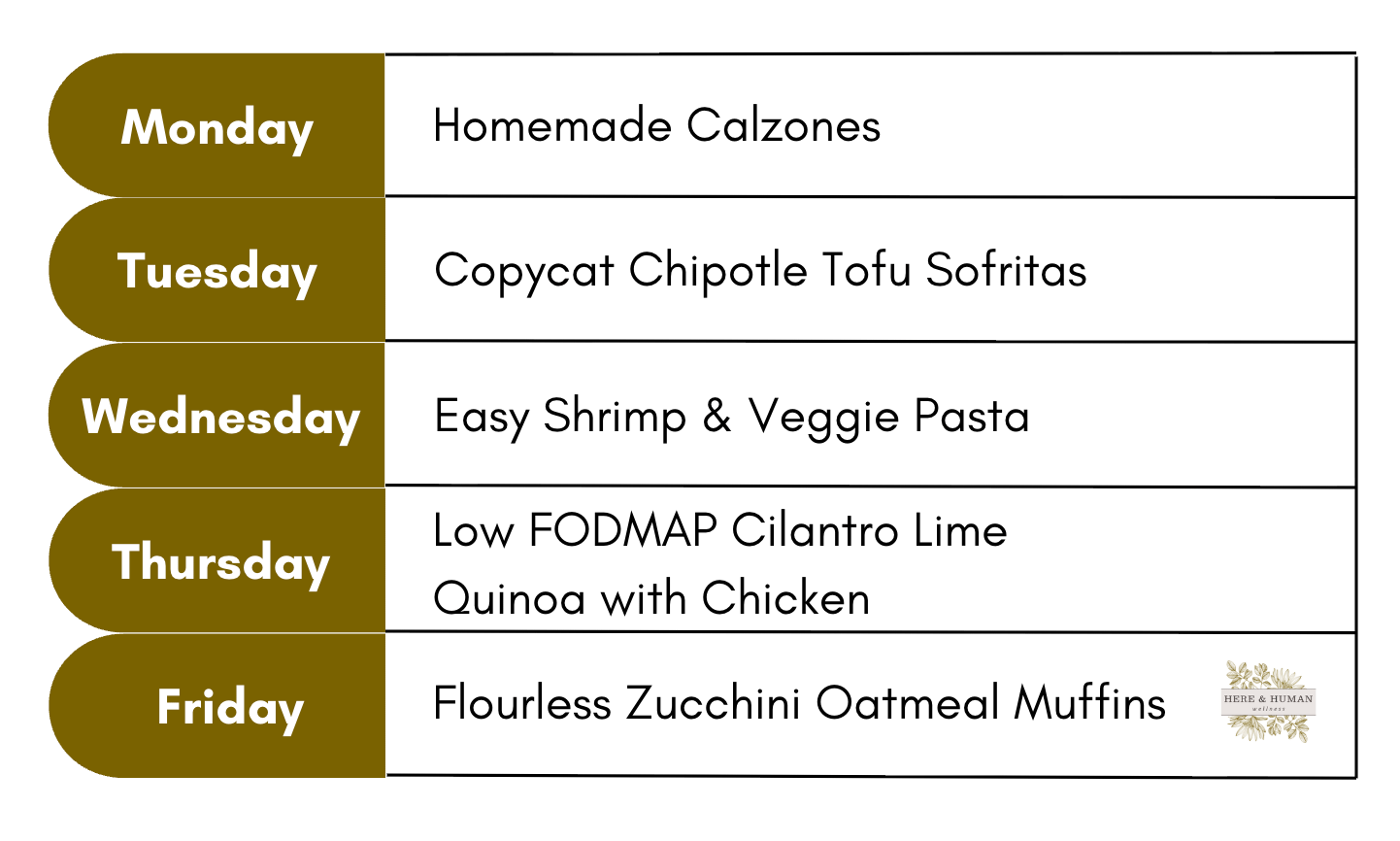
Menu for the Week of March 16-20th
Monday
Homemade Calzones: Each week, one of my boys chooses a recipe for us to make together. This week my middle son picked calzones. It’s honestly become one of the most fun traditions we’ve started. The boys love showing off what they made, and the other two definitely enjoy the critic role…

Tuesday
CopyCat Chipotle Tofu Sofritas: I made this for my own lunches this week, and it’s seriously spot on, if not better than the original. Check out my friend’s blog for more plant-based inspiration. She’s fabulous.

Wednesday
Easy Shrimp & Veggie Pasta: An ideal recipe to welcome spring. Light, fresh, and easy to pull apart ingredients if your kids prefer things served separately.

Thursday
Low FODMAP Cilantro Lime Quinoa and Chicken: FODMAPs are fermentable carbohydrates that can trigger symptoms for people with IBS. Since I do a lot of work in the gut health space, I like to include an occasional FODMAP-friendly recipe for clients navigating digestive issues.

Friday
Flourless Oat Zucchini Muffins: For my gluten-free or low-fructan friends, these muffins make a great breakfast or snack option.

Enjoy the beautiful spring flowers, friends. They are far from urgent. :)
Love this! It’s a nicer way of “being!”
What a beautiful message. Lands perfectly for me today.