


It’s always fun to peek ahead at 2026 food and nutrition trends, and according to the Hartman Group, fiber is quietly emerging as the next big focus.
But I’m not quiet, HOORAY!
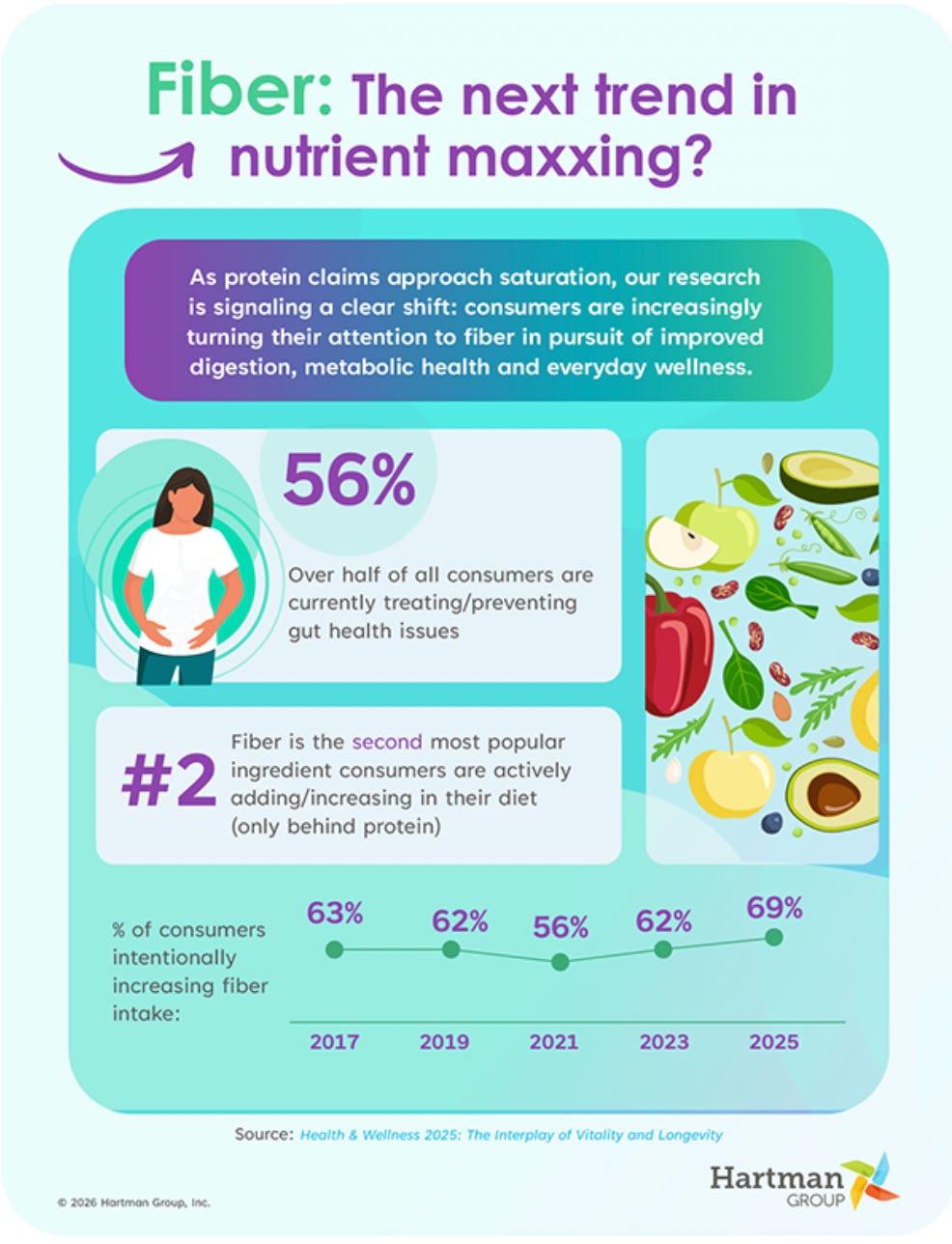
With more than 1/2 of people reporting gut health concerns, fiber is now the second most common nutrient people say they’re intentionally trying to increase, right behind…you guessed it: protein. And I don’t think this shift is about chasing trends. It feels more like people are looking for digestion support, metabolic health, and something that actually helps them feel better day to day.
However, our upside-down pyramid version of the Dietary Guidelines tells a different story.
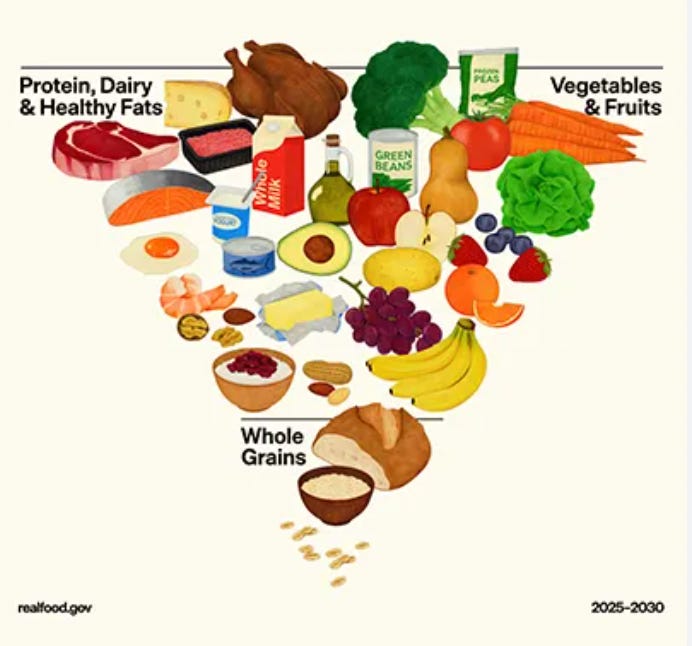
Protein, from marbled red meat and ground beef to chicken, cheese, salmon, eggs, and whole milk, gets clear priority, while plant protein (beans didn’t even make the cut!) feels like it got demoted. And when plant protein slides down, fiber tends to slide right along with it.
Protein is still very much having its moment. I saw protein popcorn in the airport last week. And to be clear, I’m not anti-protein, ha! I prioritize it at most meals myself. But if healthspan is the goal; then fiber deserves far more attention than it’s getting.
Fiber doesn’t have the glamour of protein shakes or collagen powders. It’s often associated with gas, prunes, Beano, and Metamucil. Not so sexy, and yes, if you ramp it up too quickly, it can come with some uncomfortable side effects. But fiber is foundational. It’s what makes plant-forward eating so powerful in the first place. It’s the part of plant proteins that offers benefits far beyond amino acids.
How Are We Doing?
The current daily fiber target for adults:
Women: ~25 grams/day (we can go higher, this is just the minimum)
Men: ~38 grams/day
But the reality is that we average about 15 grams/day. And the lack of plants is showing up in higher rates of heart disease, diabetes, and digestive issues.
Fiber: It’s About More Than Digestion
When most people think of fiber, they think “keeps you regular.” Yes/and: that’s just the tip of the iceberg. Fiber influences nearly every system in the body:
Gut health → feeds beneficial bacteria. People who eat the most fiber have up to 30% greater microbial diversity.
Longevity → high fiber intake is linked to lower risk of heart disease, stroke, type 2 diabetes, and some cancers.
Blood sugar balance → slows absorption of glucose and improves insulin sensitivity.
Immune function & mood → via the gut-brain axis, higher fiber diets are tied to lower inflammation and better stress resilience.
Have You Heard of the 30-Plant-a-Week Rule?
The American Gut Project (now called The Microsetta Initiative) is an ongoing research project studying the human gut microbiome. People from all over the world contribute samples and data so researchers can look for patterns not trends. What they’ve found is that people who ate 30 or more different plant foods per week had the most diverse and resilient gut microbiomes.
What counts? We’ve got lots to choose from: spices, nuts, seeds, herbs, legumes, fruits, whole grains, and veggies all count.
Meet the Short-Chain Fatty Acids (SCFAs): The Real Magic
Here’s where fiber gets us microbiome geeks going. When your gut bacteria ferment certain fibers, they produce compounds called short-chain fatty acids (SCFAs).
The big 3 include:
Butyrate → Nourishes colon cells, reduces inflammation, may protect against colon cancer.
Propionate → Helps regulate blood sugar and cholesterol.
Acetate → Supports appetite regulation and may protect against weight gain.
Beyond the gut, SCFAs influence the immune system, metabolism, and even brain health. Some research suggests they may help protect against depression and cognitive decline.
Not All Fiber Is the Same
Soluble fiber → forms a gel, lowers cholesterol, stabilizes blood sugar.
Examples: oats, apples, beans, chia seeds.Insoluble fiber → adds bulk, prevents constipation.
Examples: whole wheat, brown rice, veggies.Prebiotic fibers (like inulin, GOS) → feed gut bacteria, make SCFAs.
Examples: onions, garlic, asparagus, bananas.Resistant starch → acts like fiber, promotes satiety and gut health.
Examples: cooled potatoes, green bananas, lentils.
A Day of Eating: Low-Fiber vs. High-Fiber
Breakfast
Low-fiber: White toast + fried egg (2g) Fiberful Swap:
High-fiber: Sprouted grain toast + avocado + chia sprinkle + fried egg (10g)
Snack
Low-fiber: Crackers and cheese (1g) Fiberful Swap:
High-fiber: Apple + almonds (7g)
Lunch
Low-fiber: Turkey sandwich on white bread, chips (3g) Fiberful Swap:
High-fiber: Turkey + hummus wrap in a high-fiber tortilla + veggie sticks (12g)
Dinner
Low-fiber: Grilled chicken + mashed potatoes (4g) Fiberful Swap:
High-fiber: Grilled chicken + quinoa + roasted broccoli (14g)
Daily Totals
Low-fiber day: 10g
High-fiber day: 43g!!!!
The “Start Low, Go Slow” Rule
P.S. It would be ill-advised to jump from 10g to 40g overnight. Your gut will not be happy.
Instead:
Increase intake by 3–4 grams/day at a time.
Drink more water (fiber needs it).
Mix soluble + insoluble for balance.
Why Fiber Deserves the Crown
In nutrition grad school, my best friend’s license plate said 5-BER. That was 20+ years ago. Fiber still reigns queen, even though at the time, we barely scratched the surface of what we now know about the microbiome.
Eat widely. Swap smartly. Let your microbiome feast.
Your body (and future self) will thank you!
Menu for the Week of January 26-30th

Giving you lots of high fiber recipes this week!
Monday
Best DIY Hummus: I rarely make my own hummus, but when I do, I’m reminded why it’s worth it. It’s far less expensive than store-bought, and you can easily play with the flavors, such as more or less garlic, extra lemon, or a handful of fresh herbs depending on your taste prefs!

Tuesday
Sesame Soba Noodle Bowl: If you can boil noodles, you can make this. It’s simple, satisfying, and very adaptable. Chicken or shrimp would be an easy way to add protein if you want to round it out a bit more.

Wednesday
One Pan Chicken Burrito Bowl: This cheesy chicken bowl is a weeknight win. Adding beans boosts the fiber (and staying power), making it more filling and more balanced without adding extra work.

Thursday
Meatloaf with Mushrooms: Mixing mushrooms into meatloaf adds fiber and nutrients while stretching the meat, good for both your health and your grocery budget. It’s one of my favorite quiet upgrades to a classic.

Friday
Flourless Chocolate Chickpea Brownies: I know, beans in brownies sounds questionable. But a client shared this recipe with me last week and was genuinely impressed, so I had to pass it along.

Happy last week of January, friends, what?!
5-BER! Omg, love it.