


Do you know that feeling of listening to a podcast, going to a conference, or spending time with an expert… and walking away really motivated to overhaul that area of your life?
And then, if you’re human, the zest fades a few weeks later? But still… something more sustainable sticks, hopefully?!
That happened last week after I listened to one of my favorite gut health podcasts: The Gut Health Podcast, hosted by Kate Scarlata, MPH, RDN and Megan Riehl, PhD. They interviewed Heather Armstrong, Associate Professor of Gastroenterology at the University of Alberta. I almost skipped the episode because the topic was… fiber.
As a dietitian, I talk about fiber ALL the time. What more could I learn? Well, I learned quite a bit! And now I’m experimenting with a few of the things I learned (and of course, sharing them with you).
FIRST…
It’s kind of wild that one of the most influential nutrients for our long-term health is still severely under-consumed. Only about 10% of Americans meet recommended fiber goals.
The Recommendations
For women: about 21–25 grams per day
For men: closer to 35–38 grams per day
Now yes…you could technically eat two or three high-fiber, low-carb tortillas with 13 grams each and call it a day. But what the research continues to show is that it’s not just about hitting a number.
It’s about the diversity of fiber types: the variety of plants feeding a variety of microbes, that seems to matter most for gut health balance.
Do you know how many grams of fiber you typically get in a day?
It can be surprisingly eye-opening to count up your grams of fiber and see where you actually land. And, as Heather mentions in the pod, those recommendations? They’re minimums!
Anthropological data suggest our ancestors likely consumed 80–100 grams of fiber per day, largely from a wide variety of plants.
I absolutely do not recommend anyone jump from 12 grams to 80 grams. That would not go well. But, maybe a little bit of this and a little bit of that could help you hit the current target!
Just remember: when it comes to fiber, low and slow is always the name of the game.
Why This Matters to Me (and My Clients)
A large part of my work centers around gut health: IBS, bloating, constipation, diarrhea, elimination protocols, inflammation.
For many people, digestive symptoms become so disruptive that they start organizing their lives around bathroom access.
Whether you’ve been diagnosed with IBS (where digestive symptoms are tied to pain), or you’re simply frustrated by irregularity, understanding which fibers work for your body, and which don’t, can be a game changer. When paired with other gut health strategies, it often shifts everything.
Back to the POD: What I Already Knew (But Needed the Reminder)
Diversity matters.
Many of my clients come in eating very nutrient-dense diets. But they might also be eating the SAME vegetables. The SAME salad. The SAME breakfast.
When we repeat the same plants over and over, we expose ourselves to:
The same antioxidants
The same vitamins and minerals
The same types of fiber
Different fibers feed different microbes, and we eat the same fibers, we tend to cultivate the same bacterial patterns. Microbiome reports often include what’s called an “alpha diversity score,” and in general, higher diversity is associated with better overall health outcomes.
So the ONLY goal isn’t “eat more fiber.” It’s also “eat a wider variety.”
What Was New to Me
Citrus: A Mood Food (and More)
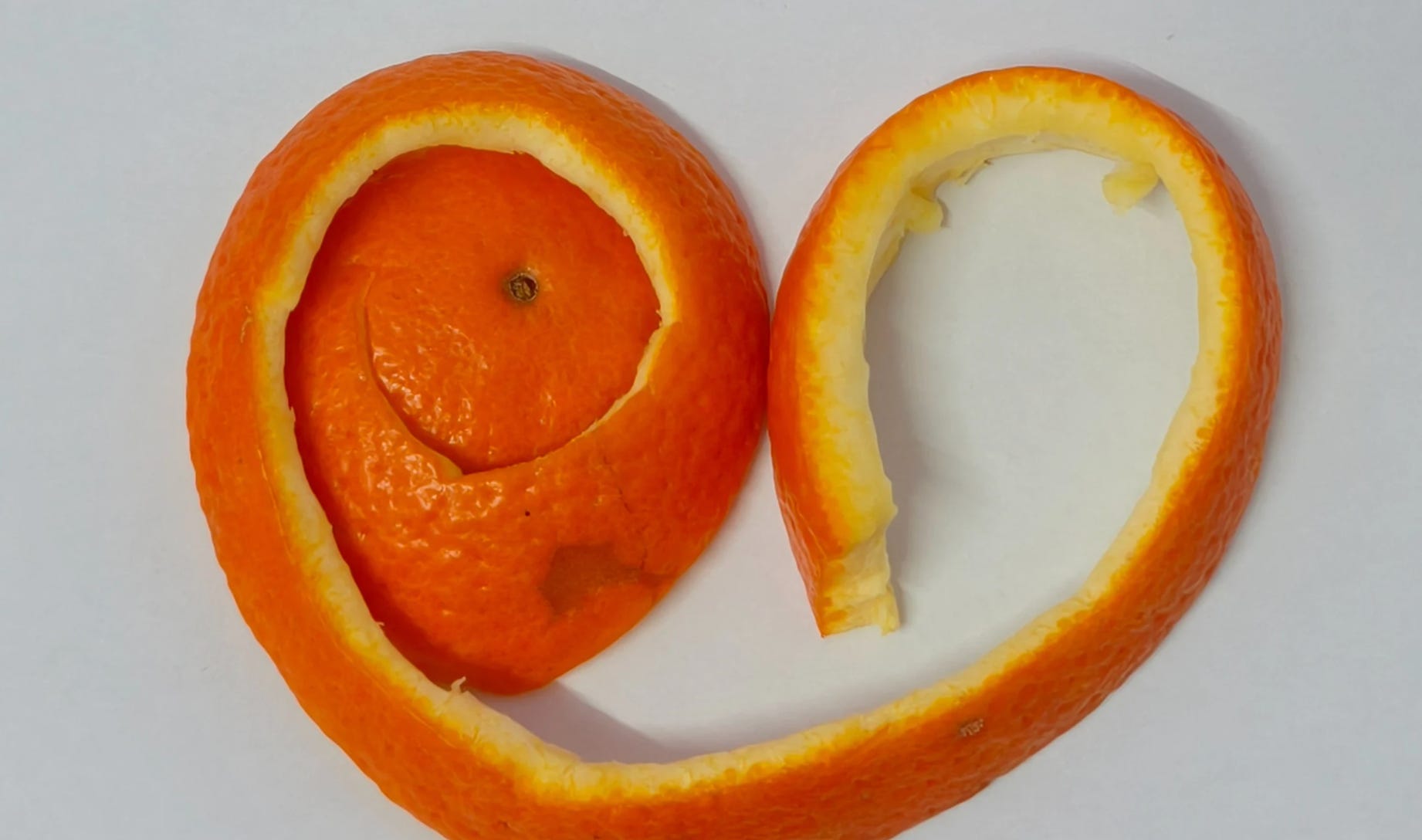
A large prospective study published in the journal Microbiome followed 32,427 women from the Nurses’ Health Study II. Researchers found that women who consumed more citrus, particularly oranges and grapefruit, had a lower future risk of developing depression. Roughly one medium orange per day was associated with about a 20% lower risk.
A few important clarifications:
This was an observational study. It shows association, not proof of causation.
The effect appeared specific to citrus.
Total fruit intake did not show the same association. Apples and bananas did not show this pattern.
The flavanones and polyphenols in citrus have also been studied for supporting endothelial function, improving blood flow, reducing oxidative stress, supporting cardiometabolic health, and feeding beneficial gut bacteria.
And here’s what surprised me: Many of these compounds are concentrated in the PEEL! If you’d prefer not to gnaw on the semi bitter orange rind, you could chop the peel citrus into smoothies, yogurt, salad dressings, or grain bowls? That’s a simple way to increase polyphenol exposure.
I also have an orange smoothie recipe below…(and add the peel!)
Apple Seeds: A Little Nuance
Apple seeds contain polyphenols and small amounts of fatty acids in their oil.
They also contain amygdalin, which can release small amounts of cyanide when metabolized. That sounds alarming!! But dose matters. You would need to consume a very large quantity of crushed seeds to pose real risk.
So no, I am not recommending apple seed smoothies…but, if you occasionally chew near the core or swallow a seed, there is no need to panic. You might even feel god about it! Apples, especially with the skin, emain one of the most accessible fiber- and polyphenol-rich foods we have.
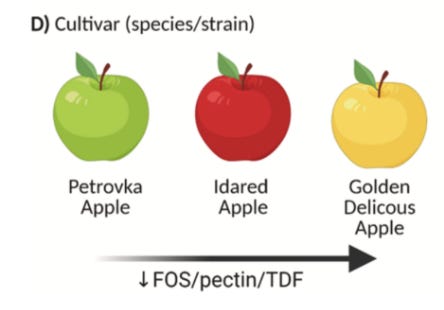
Image from Kate Scarlata Gut Health Newsletter
PS…green apples tend to have a bit more of the fibers (that most of us can enjoy…compared to golden. Although…always eat your favorite apple. I love golden…Opal apples are the BOMB.
Beta-Glucans and Beta-Fructans
(Two Fibers. Very Different Experiences.)
Beta-glucans, found in oats and barley, are soluble fibers well known for lowering LDL cholesterol, improving blood sugar regulation, supporting immune function, increasing short-chain fatty acid production, and supporting colon health. This is one reason oatmeal is such a quietly powerful breakfast.
Beta-fructans (often called inulin-type fructans) are found in chicory root, onions, garlic, leeks, asparagus, and wheat. They act as prebiotics, selectively feeding beneficial bacteria like Bifidobacteria.
Research suggests that the fructans may increase beneficial microbial populations, improve bowel regularity, support calcium absorption, influence appetite hormones, improve insulin sensitivity in some populations, and reduce certain inflammatory markers.
In the podcast, Dr. Armstrong discussed research using chicory root fiber powder, around two tablespoons per day, which showed measurable shifts in the gut microbiome. I’m starting with ½ teaspoon at a time.
Because…: not all fiber types are good for everyone.
Beta-fructans are highly fermentable and can worsen symptoms in some individuals with IBS or FODMAP sensitivities. For one person, chicory root fiber might feel fantastic. For another, it might mean an afternoon of bloating and regret.
The Big Takeaway
Fiber is powerful. But it’s also nuanced!
The type of fiber matters just as much as the amount. If someone is experiencing constipation, diarrhea, bloating, or IBS, we don’t just “add more fiber.” We get curious about which fibers support their system without creating more discomfort.
If you’ve been navigating digestion, inflammation, or simply feeling unsure what works for your body, I’d love to help you sort through it.
In the meantime, if you’re feeling curious, scroll down and take a look at the citrus peel smoothie recipe below.
Increase slowly.
Add variety.
Notice what changes.
Because fiber isn’t just roughage.
Think of your gut like a garden. It’s most resilient and beautiful when it looks like a wildflower meadow: lots of different colors, textures, and species working together compared to a perfectly manicured rose garden with only one type of bloom. :)
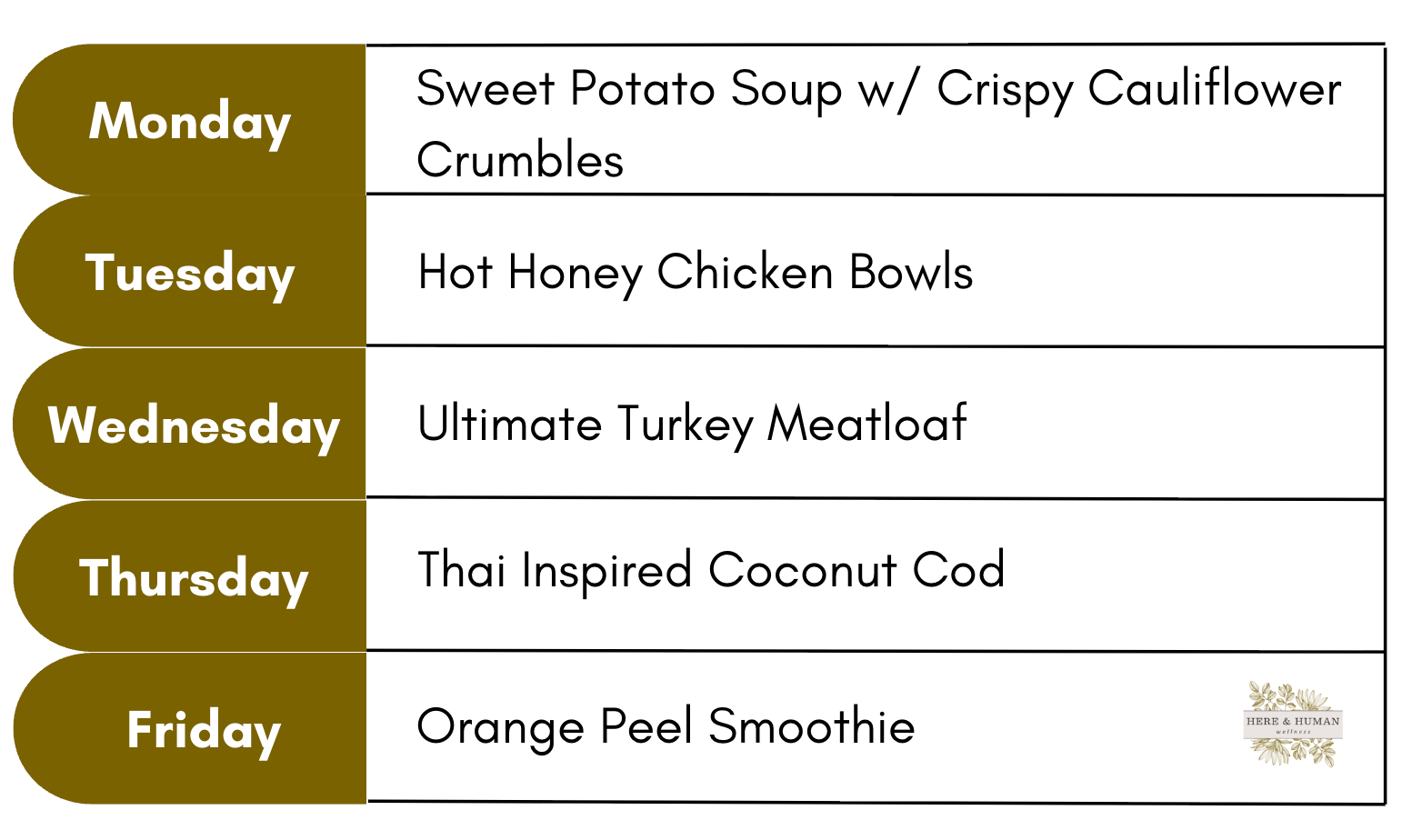
Menu for the Week of March 2nd-6th
Monday
Sweet Potato Soup with Cauliflower Crumbles: So many plants in one bowl! And as the weather warms up, you’ll likely see fewer hearty soups around here, so I’m savoring this one while I can.

Tuesday
Hot Honey Chicken Bowls: A Southern-inspired spin on a protein-packed power bowl, loaded with plants and just the right amount of sweet heat.

Wednesday
Ultimate Turkey Meatloaf: Inspired by a client who said last week, “I’ve really been craving meatloaf.” This one’s for you, friend.

Thursday
Thai Inspired Coconut Cod: Cod is a mild, flaky fish, which means it’s perfect for soaking up bold flavor. This Thai-inspired dish brings it!

Friday
Orange Peel Smoothie: She doesn’t add the peel… but we will!

It’s MARCH!!!! XO Jen